Which Shipping Service Actually Has the Lowest Carbon Footprint?

Every time you click "Place Order" online, a quiet chain reaction begins. A box is pulled from a shelf, packed with paper and tape, loaded onto a truck, flown across a time zone, and dropped onto your front porch.
Convenience has a cost, and a large portion of that bill is paid in carbon dioxide.
If you run an e-commerce store, sell crafts on the side, or are simply a conscious consumer trying to wrap your head around your environmental impact, you have likely wondered: Which shipping carrier is actually the greenest?
Is it UPS, USPS, FedEx, or DHL?
The reality of shipping emissions is fascinatingly complex—and the answer depends heavily on whether your package travels by road or through the skies. Let’s break down how the major delivery giants stack up against each other.
The Golden Rule of Shipping Emissions: Air vs. Ground
Before comparing specific companies, we need to look at the physics of logistics. The single biggest factor dictating a package's carbon footprint is not the logo on the side of the truck; it is the mode of transportation.
Air Freight: Planes are the heavy metal rockstars of carbon output. Jet fuel burns hot, fast, and high in the atmosphere, creating emissions that pack an intense greenhouse punch.
Ground Freight: Delivery vans, semi-trucks, and trains are vastly more fuel-efficient per package because they carry thousands of items at once, spreading the emissions footprint thin.
If a carrier relies heavily on a massive cargo airline fleet, their baseline carbon footprint per package will naturally skew higher unless they aggressively offset it. Keeping this in mind, let’s look at how the big four approach sustainability.
United States Postal Service (USPS)
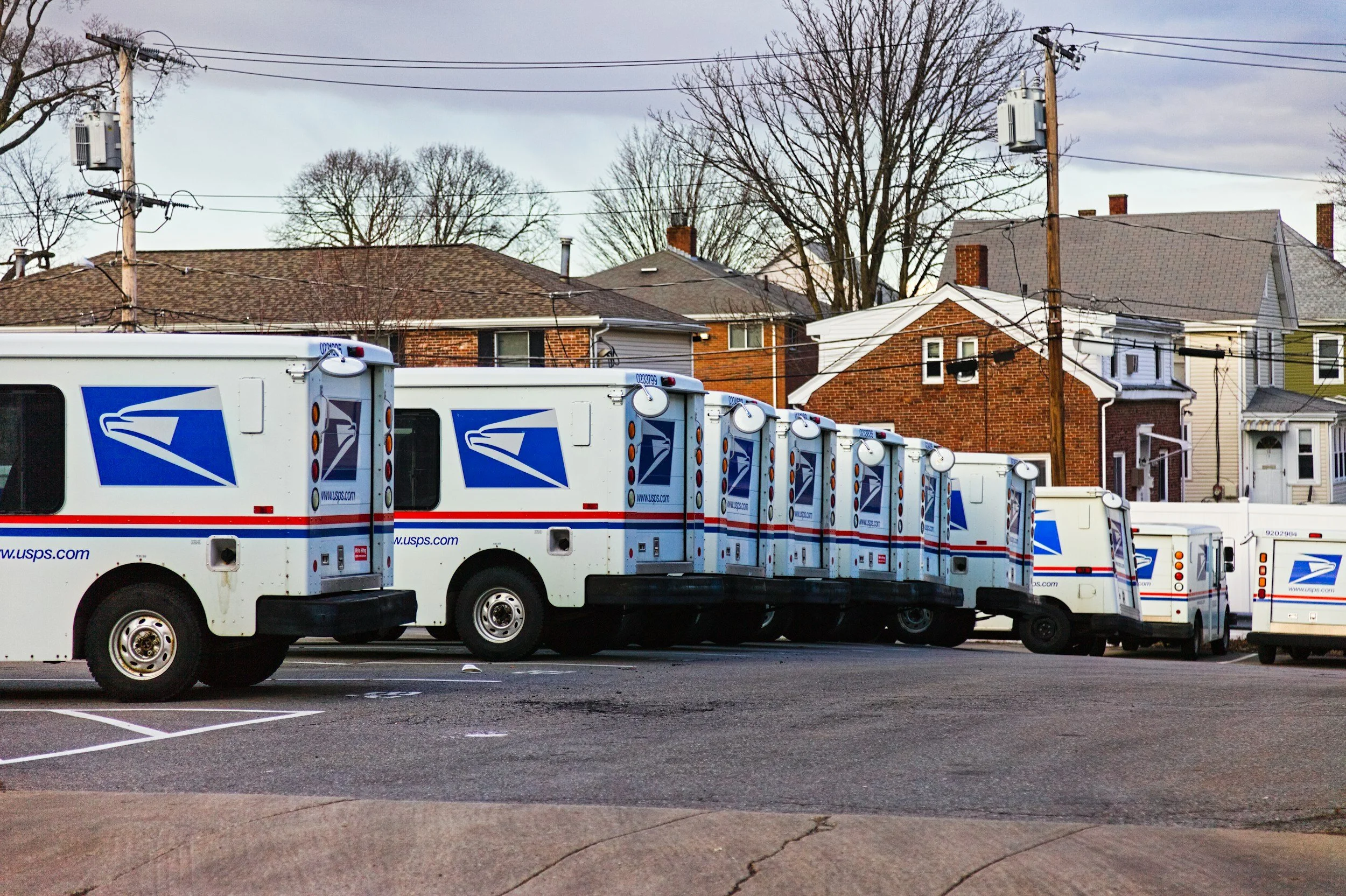
The postal worker walking up your driveway is doing something unique: they are already visiting your home today, whether you have a package or not.
Because USPS letter carriers cover virtually every residential address in America six days a week, their "last-mile" delivery efficiency is exceptionally high for domestic mail and small packages. They don't have to drive out to your house just for your single box; they drop it off while delivering the daily mail.
The Fleet Challenge: For years, the Achilles' heel of the Postal Service has been its aging fleet of iconic, gas-guzzling Grumman Long Life Vehicles (LLVs), some of which date back to the late 1980s and get abysmal gas mileage.
The Path Forward: USPS has pivoted heavily toward modernizing its fleet, ramping up orders for next-generation delivery vehicles (NGDVs) featuring a mix of fuel-efficient internal combustion engines and battery-electric vehicles (BEVs).
Emissions Target: USPS aims to slash its direct operational emissions by 40% by 2030.
The Verdict for Consumers: For lightweight residential deliveries, USPS often yields one of the lowest domestic carbon footprints simply due to route density.
United Parcel Service (UPS)
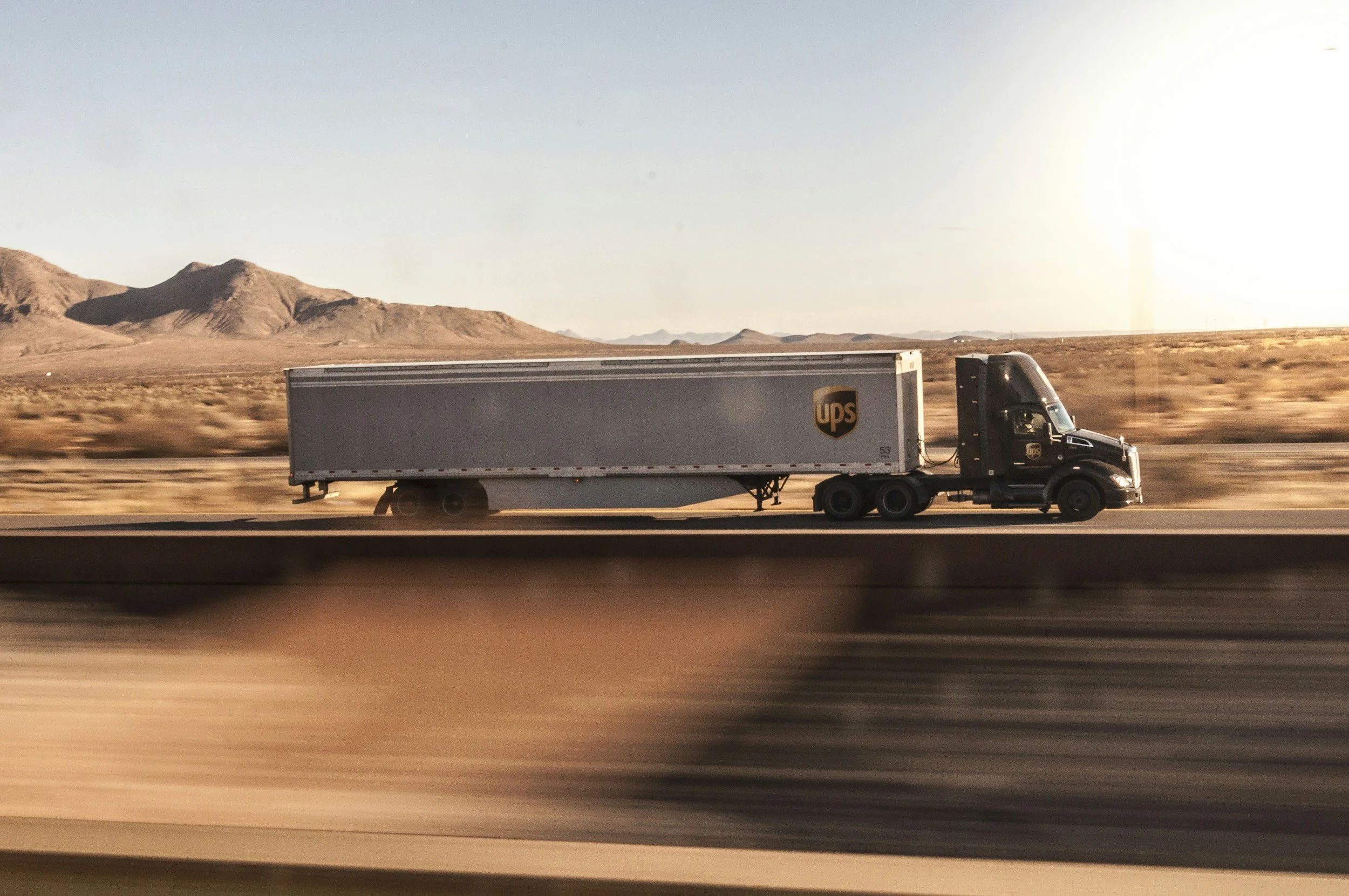
With its sea of brown trucks, UPS is the backbone of American commerce and residential package delivery.
UPS relies on an enormous integrated ground network. While they do operate an airline for express and international shipping, a massive percentage of their domestic volume stays on highways and local delivery vans.
Alternative Fuels: UPS has spent over a decade diversifying its fuel supply. They utilize millions of gallons of alternative fuels, including renewable natural gas (RNG), compressed natural gas (CNG), and propane, which burn cleaner than traditional diesel.
Smart Routing: Using advanced proprietary software called ORION (On-Road Integrated Optimization and Navigation), UPS maps out hyper-efficient delivery routes for drivers. By cutting out unnecessary left turns and backtracking, they save millions of gallons of fuel every year.
Net-Zero Target: UPS has committed to reaching 100% carbon neutrality across its global operations by 2050, backed by heavy investments in fleet electrification and renewable electricity facilities.
The Verdict for Consumers: UPS is a powerhouse of logistical efficiency. If you choose standard ground shipping instead of air, UPS keeps its per-package emissions surprisingly low.
FedEx
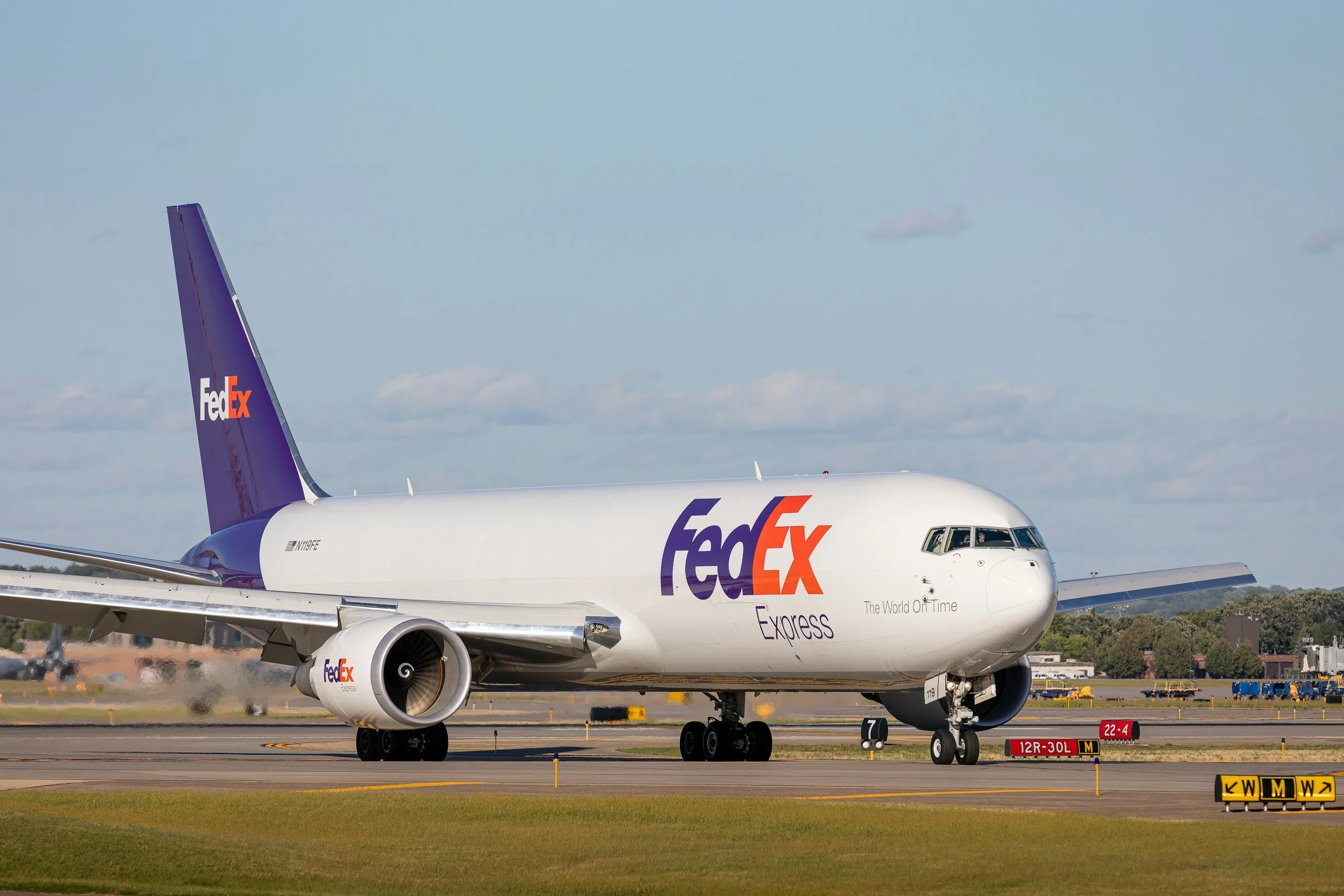
FedEx built its empire on speed. When you need a document across the country by 10:30 AM tomorrow, it’s flying on a FedEx plane.
Because FedEx operates one of the largest cargo airline networks in the world, its raw carbon footprint per express package tends to be high. Air freight is fast, but it is carbon-intensive.
The 2040 Goal: FedEx has set an aggressive target to achieve carbon-neutral operations globally by 2040—a full decade ahead of several competitors.
Fleet Electrification: FedEx has pledged that 100% of its global parcel pickup and delivery vehicle purchases will be zero-emission electric vehicles by 2030, aiming for a 100% electric fleet by 2040. They have partnered with electric vehicle innovators like BrightDrop to roll out thousands of electric vans.
Fuel Conservation: Through programs like their FedEx Fuel Sense initiative, they actively audit flight paths and aircraft weight to shave off fuel consumption.
The Verdict for Consumers: If you use FedEx standard ground, your footprint is reasonably managed. However, if you rely heavily on overnight air shipping, your package's carbon impact skyrockets.
DHL
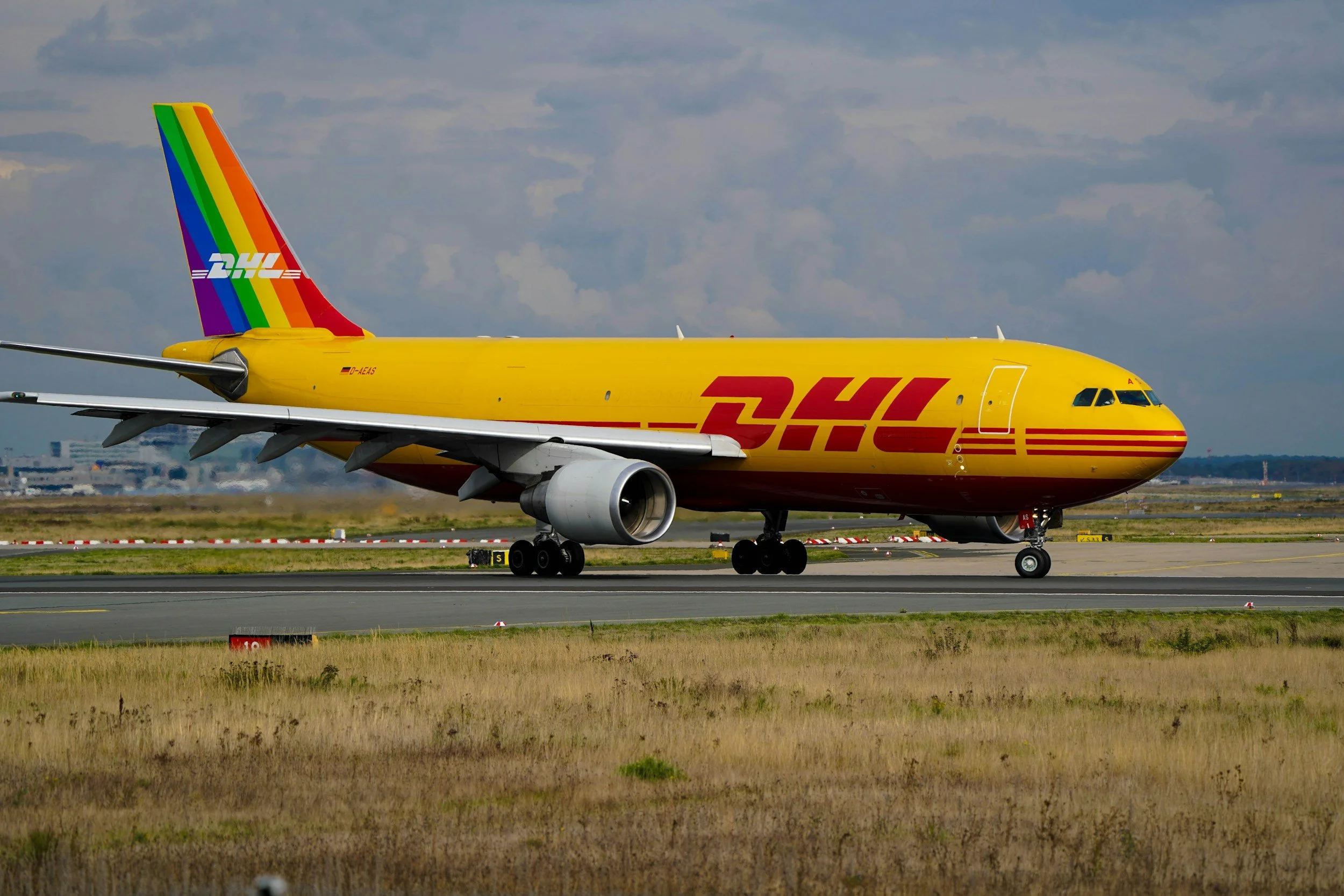
If you are shipping a package across an ocean, DHL is likely part of the journey. As an international logistics giant, they have made sustainability a core part of their brand identity.
International logistics inherently involves vast distances and heavy reliance on both long-haul cargo flights and container ships. To tackle this, DHL has pioneered some of the most innovative green logistics products in the industry.
GoGreen Plus & Sustainable Aviation Fuel (SAF): DHL offers a service called GoGreen Plus, which allows customers to actively reduce their scope 3 emissions by paying into Sustainable Aviation Fuel (SAF). Instead of just buying vague carbon offsets (like planting trees), SAF replaces traditional fossil-based jet fuel with renewable waste-based feedstocks (like used cooking oil), reducing lifecycle emissions by up to 80%.
Book and Claim: DHL uses a smart accounting mechanism called "Book and Claim," which lets companies fund green fuels even if those specific fuels aren't physically pumped into the exact airplane carrying their specific box.
Net-Zero Goal: DHL Group has committed to achieving net-zero emissions by 2050, with massive interim milestones for electrifying their local delivery fleet.
The Verdict for Consumers: DHL is a leader in transparency and proactive reduction tools, making them an excellent choice for businesses looking to clean up cross-border supply chains.
How You Can Lower Your Shipping Footprint Today
You don't have to run a multi-million-dollar corporation to make a difference. Whether you're sending a birthday gift to a friend or running a small online shop, you can drastically shrink your delivery footprint with a few simple habits:
Ditch the Air: Whenever possible, choose standard ground shipping instead of express or overnight options. Give your packages time to travel by truck, van, or train.
Right-Size Your Box: Shipping empty air means carriers waste fuel hauling empty space. Match your product to the smallest possible box.
Consolidate Orders: If you are ordering multiple items online, look for an option that says "Ship all items in one box together" rather than shipping them piece-by-piece as they become available.
Use Checkout Offsets: If you run an e-commerce platform (like Shopify or WooCommerce), consider installing plugins like Planet or EcoCart, or opt into carrier programs like UPS Carbon Neutral and DHL GoGreen Plus to help fund green infrastructure and sustainable fuels.
No shipping service is completely "green" yet—moving heavy objects across miles of land, sea, and air inherently requires energy. However, by choosing ground shipping over air freight, supporting carriers investing heavily in electric fleets, and using smarter packaging, we can all help lighten the load on our planet.