Can Microsoft Offset Their 25% Increase In Carbon Emissions? (2025 Report)
The artificial intelligence (AI) revolution is officially here. From generating code to summarizing massive textbooks in seconds, AI is completely transforming how we live, study, and work. But behind every clever chat response and AI-generated image lies a massive, invisible network of physical infrastructure: sprawling datacenters, high-powered computer chips, and an enormous appetite for electricity and water.
This creates a massive environmental paradox. Can we build a high-tech AI future without destroying the planet?
To answer that question, tech giant Microsoft released its 2026 Environmental Sustainability Report, which details its environmental performance during the 2025 fiscal year. It provides an honest look at what it takes to build a digital future responsibly.
The report reveals a striking narrative of high-stakes tension: while Microsoft is implementing some of the most advanced green technologies on Earth, the sheer speed of the AI boom is pushing their carbon footprint up faster than their green solutions can scale.
Not to be outdone by Amazon’s 16% increase in carbon emissions, Microsoft has managed to increase theirs by 25%.
Microsoft’s Sustainability Statistics at a Glance
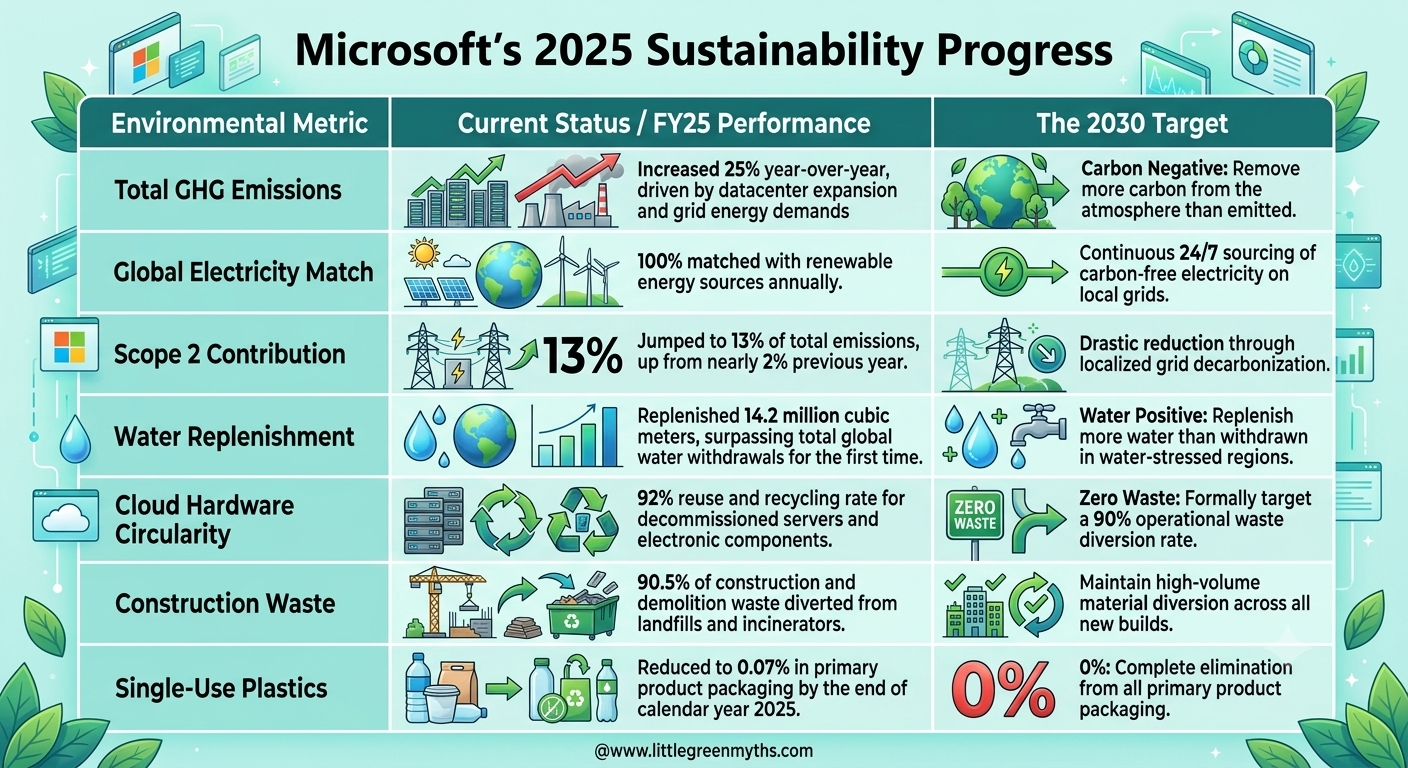
Before we dive into the specific wins and losses, let’s look at the raw numbers shaping Microsoft’s footprint. The following data highlights the progress made and the immense pressure the company faces as its infrastructure expands.
Where Microsoft is Winning
Microsoft has set a high bar for environmental corporate responsibility, committing to become carbon negative, water positive, and zero waste by 2030. The 2026 report highlights several groundbreaking initiatives where the company is successfully executing its vision.
1. Radically Redesigning the Data Center
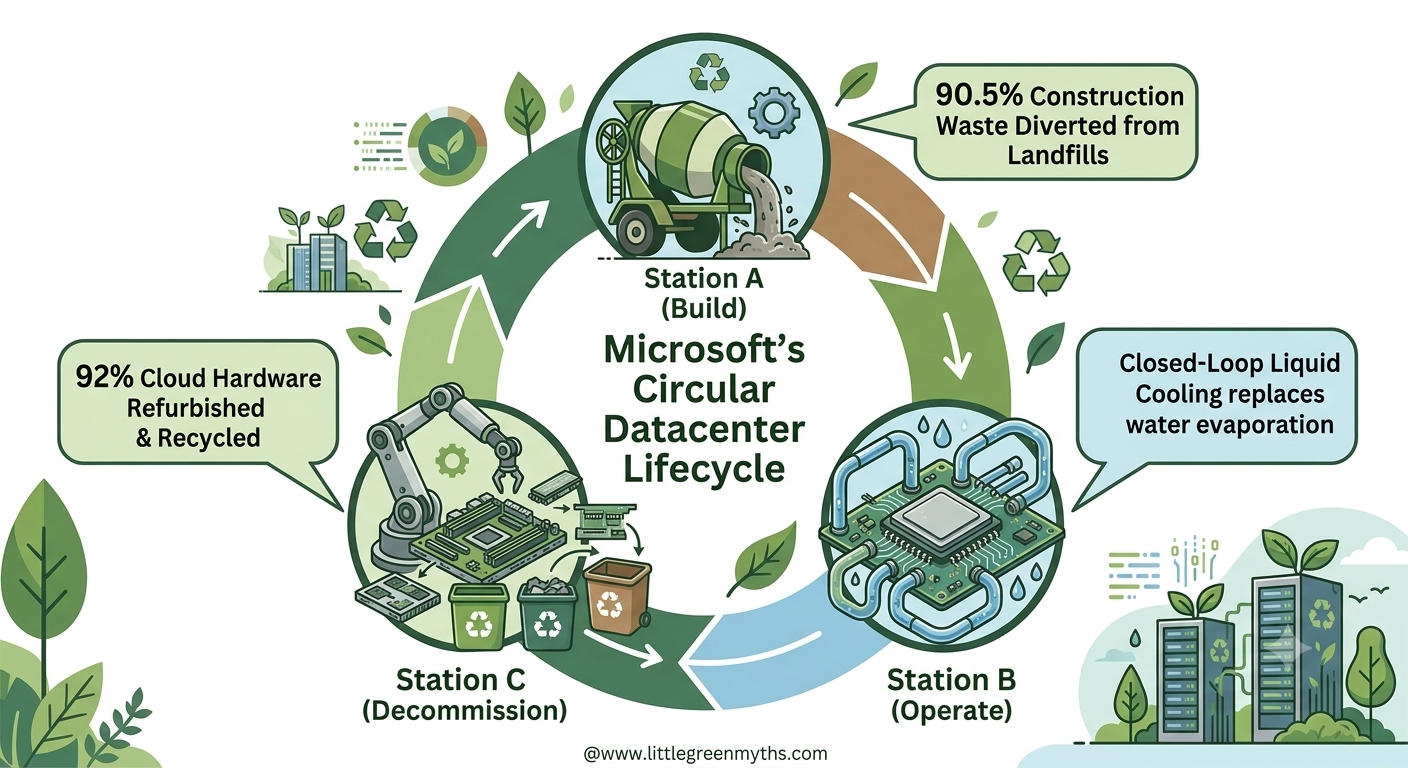
Data centers are the beating heart of the internet, but their physical structures require a massive amount of raw materials and energy. To cut down on "embodied carbon"—the emissions generated just from manufacturing construction materials—Microsoft is completely rethinking architectural design:
Hybrid Mass Timber Buildings: Microsoft has piloted building data centers using hybrid mass timber (an ultra-lightweight, high-strength wood structure), achieving up to a 35% reduction in structural embodied carbon compared to traditional steel frames.
Next-Generation Liquid Cooling: Instead of relying on traditional air conditioning units that evaporate millions of liters of water to cool hot servers, Microsoft introduced a closed-loop liquid cooling system. By circulating coolant directly to server chips, this design is expected to save more than 125 million liters of water per year, per data center.
Low-Carbon Concrete and Green Steel: Concrete and steel are responsible for roughly 15% of all global carbon emissions. Through its Climate Innovation Fund, Microsoft is backing innovative startups like Stegra in Sweden to secure near-zero-emissions "green steel" manufactured with up to 95% fewer emissions. Let’s not forget though that steel is the most recycled construction material.
2. A Massive Leap Forward in Water Stewardship
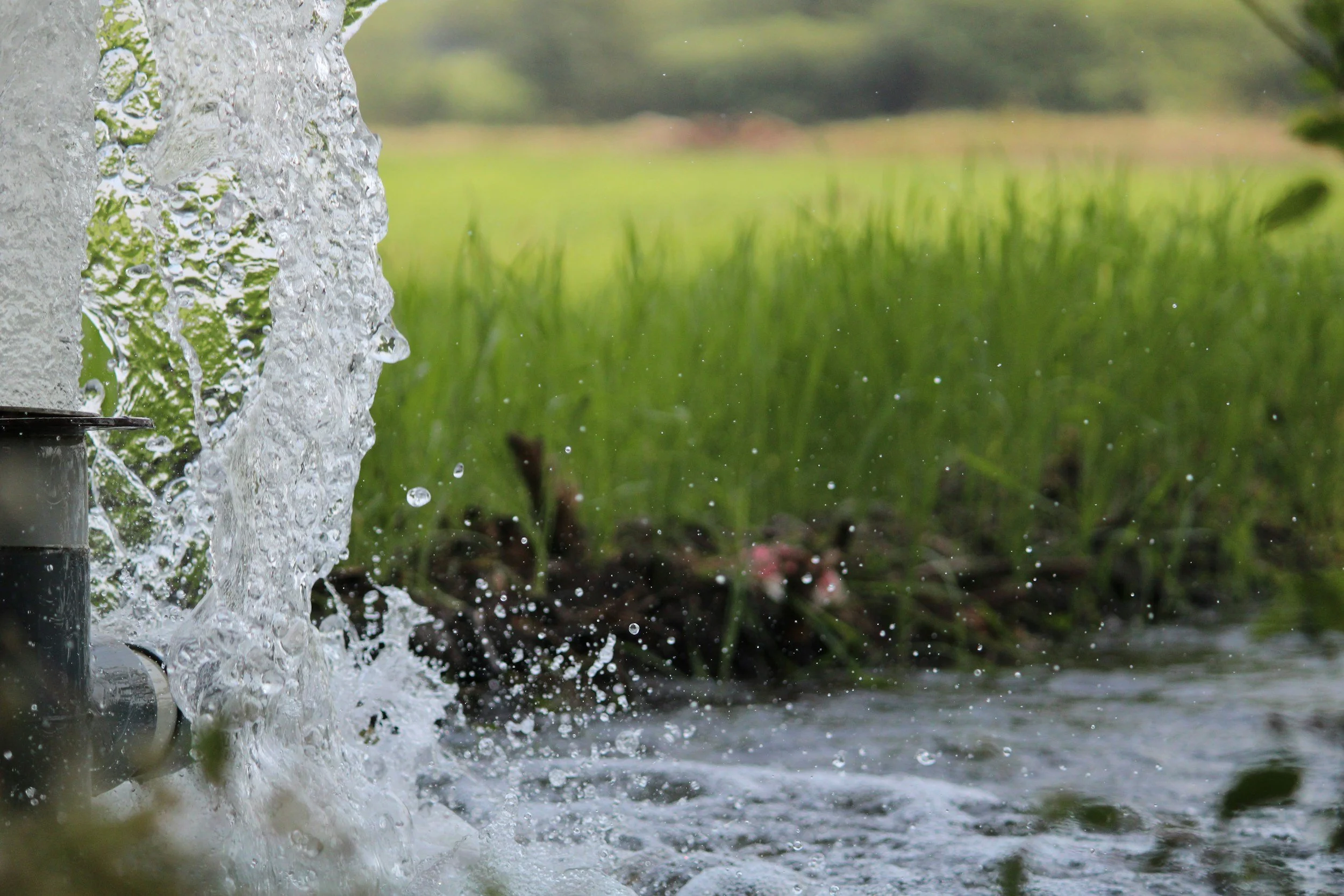
In fiscal year 2025, Microsoft achieved a historic milestone: it replenished more water globally than it withdrew from water systems, returning over 14.2 million cubic meters back to nature.
Targeting Total Withdrawals: Microsoft upgraded its sustainability goals to focus on total water withdrawals rather than just water consumed. This means they are accounting for every drop of water pulled into their systems, ensuring a higher standard of accountability.
Rainwater Harvesting Networks: In regions facing water scarcity, like Amsterdam, Microsoft built full-scale rainwater harvesting systems that capture and store water in regional aquifers. The system collects three times the water required to cool the facility, leaving the excess for local communities.
3. Turning Hardware E-Waste into a Closed Loop
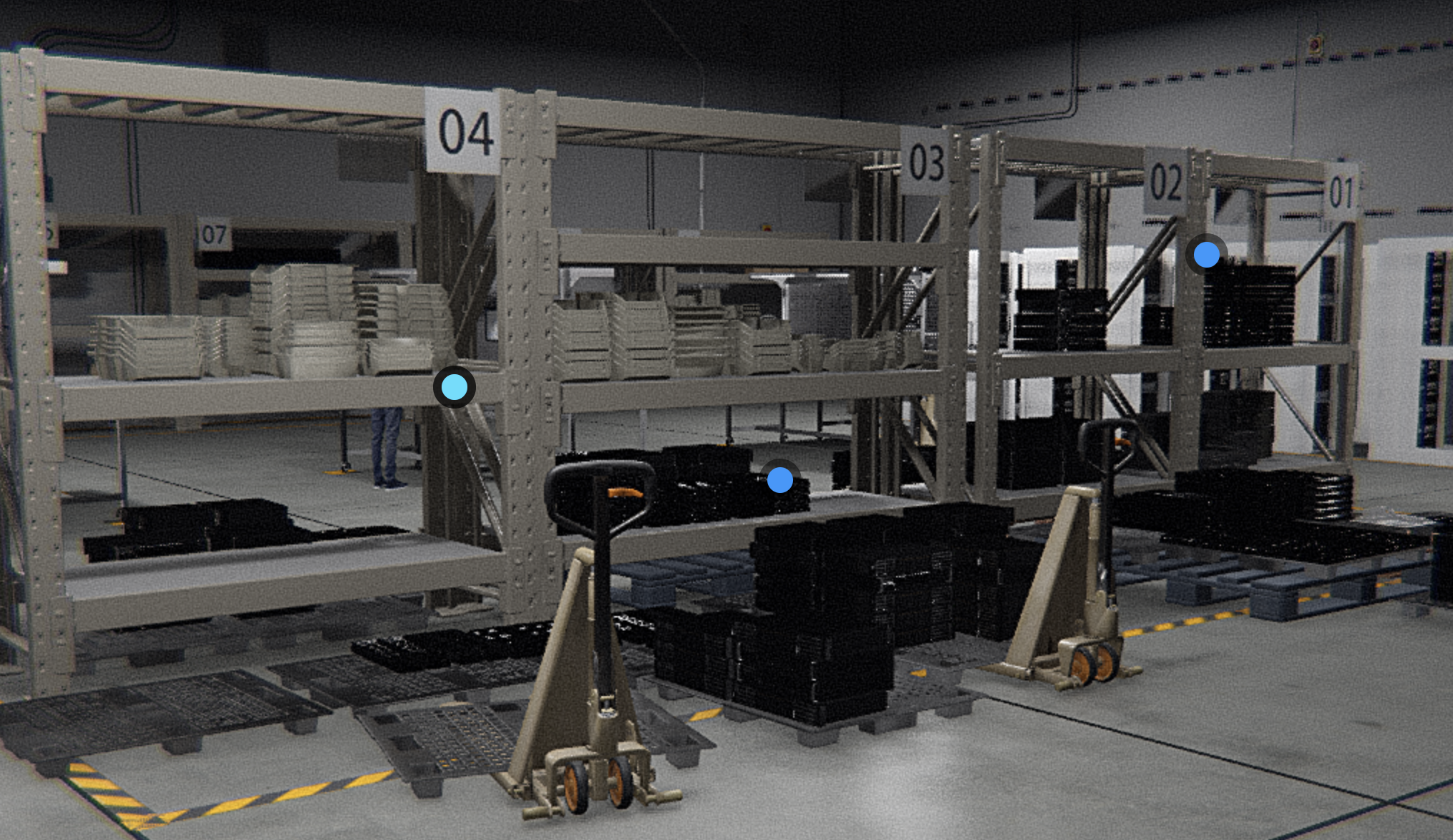
With tech hardware constantly upgrading, electronic waste (e-waste) is a massive global crisis. Microsoft's response is its Circular Centers program, designed to safely decommission, refurbish, reuse, or recycle old cloud servers.
For the second year running, Microsoft hit a 92% reuse and recycling rate for its decommissioned cloud hardware.
They are deploying advanced AI-driven robotics (partnering with companies like Molg) to autonomously disassemble complex datacenter hardware so rare earth elements and precious minerals can be reclaimed and kept out of landfills.
4. Eco-Friendly Consumer Products
The products we buy and keep in our homes also feature heavily in the report:
The Death of Plastic Packaging: By the end of calendar year 2025, Microsoft successfully eliminated nearly all single-use plastics from its primary product packaging, dropping the plastic rate down to a tiny 0.07%. Over five years, this paper-first shift kept 5,000 metric tons of plastic out of production.
XBOX Shutdown (Energy Saver) Mode: Microsoft made Energy Saver the default power mode on XBOX consoles, cutting console power draw by 20 times compared to standard sleep modes when turned off. Adoption has remained above 70%, proving that small default changes can save massive amounts of electricity globally.
Where Microsoft is Stumbling
Despite these impressive green victories, the report includes a sobering truth: Microsoft's total greenhouse gas emissions shot up by 25% year-over-year.
This exposes the steep uphill battle the company faces, showing exactly where their corporate growth is clashing with their climate goals.
1. The Exploding Carbon Footprint of AI Infrastructure
The primary driver behind Microsoft’s surging emissions is the physical expansion of their data center footprint to accommodate heavy AI workloads. Running advanced AI models requires massive, power-hungry data centers. AI models require exponentially more computing power than standard cloud software, requiring more chips, more concrete structures, and vastly more energy to run.
"While AI infrastructure is driving demand for energy, water, land, and materials, sustainability solutions are not scaling fast enough to meet demand. This tension is real..."
2. The Scope 2 Energy Crisis
To understand where Microsoft is failing to curb emissions, you have to look at how carbon footprints are categorized:
Scope 1: Direct emissions from sources the company owns (like backup generators).
Scope 2: Indirect emissions from the electricity the company purchases to run its operations.
Scope 3: Indirect emissions from the broader value chain (like the manufacturing of materials by third-party suppliers).
While Scope 3 still makes up the largest slice of Microsoft’s total footprint, Scope 2 emissions experienced an alarming explosion, jumping from nearly 2% of total emissions to 13% in just one year. This proves that even though Microsoft matches 100% of its consumption with renewable energy purchases, the sheer volume of electricity their data centers draw from local grids is heavily outstripping the immediate supply of real-time clean power.
3. Stepping Away from Renewable Energy Certificates (RECs)
A major reason Microsoft's reported emissions spiked so sharply this year is a deliberate policy change: they stopped purchasing unbundled, non-additional Renewable Energy Certificates (RECs).
In the corporate world, unbundled RECs are often criticized as an accounting trick. They allow companies to claim their energy is "green" by purchasing cheap certificates from clean energy plants located far away, without actually adding any new renewable energy to the local grid powering their facilities.
Microsoft decided to prioritize long-term systemic change over short-term public relations. By pausing the use of these certificates, their reported near-term emissions look much worse.
However, it forces them to focus entirely on funding "additionality"—meaning they are only investing in clean power projects that bring net new carbon-free electricity directly to the local grids where they operate. It’s an admirable, transparent choice, but it highlights a temporary failure to keep their current emission numbers down.
4. Supply Chain De-bottlenecking in Asia
A massive chunk of Microsoft’s emissions resides in manufacturing hardware components like semiconductors, which are concentrated across Asian markets like South Korea, Japan, and Taiwan. Decarbonizing these external factories is incredibly difficult because local national energy policies and transmission grids in those regions still heavily rely on fossil fuels like coal. Microsoft is engaging in intense policy advocacy to reform these grids, but until regional governments overhaul their infrastructure, Microsoft's Scope 3 emissions will remain stubbornly high.
AI as a Tool for Good: Innovating Beyond Operations

While AI is causing an energy headache for Microsoft’s infrastructure teams, the company’s data scientists are proving that AI can also act as a powerful tool to solve complex ecological problems globally. The report highlights several fascinating ways AI is driving real-world environmental action:
GhostNetZero: Partnering with the World Wildlife Fund (WWF), Microsoft’s AI for Good Lab developed an AI model that reviews underwater sonar scans with a 90% accuracy rate. It can locate abandoned fishing gear ("ghost nets") in minutes instead of hours, allowing conservation divers to swiftly remove them and save marine life.
Water Copilot: Developed for the Limpopo River basin in South Africa, this smartphone-accessible AI assistant combines climate data models to give local decision-makers real-time tracking for drought monitoring and highly efficient crop irrigation.
The Planetary Computer: This massive global data platform hosts over 80 petabytes of earth observation and geospatial data. It was accessed an average of 24 billion times each month in 2025, enabling scientists and urban planning teams worldwide to model environmental risks, predict severe weather patterns, and combat food insecurity caused by climate disruptions.