What Does Amazon’s Low Carbon Delivery Really Mean?
Have you ever clicked “Buy Now” on a Tuesday night and woken up on Wednesday morning to find a fresh bag of coffee beans, a new phone charger, and a pair of running shoes sitting on your front porch?
For millions of people around the world, this is a weekly, sometimes daily, reality. The convenience of modern e-commerce feels almost like magic. But behind that digital click is a massive, heavily industrialized physical reality.
There are sprawling warehouses the size of multiple football fields, data centers, complex robotic sorting systems, cross-country freight trains, thousands of cargo airplanes, and an army of delivery vans navigating local neighborhoods.
Naturally, moving millions of physical objects across the planet at lightning speed requires an astronomical amount of energy. For decades, that energy has come almost entirely from fossil fuels: diesel for the trucks, jet fuel for the planes, and coal or natural gas for the electrical grids powering the warehouses.
Recognizing the massive environmental toll of this convenience, Amazon has increasingly started promoting a greener path forward, frequently utilizing phrases like "Net-Zero Carbon," "The Climate Pledge," and "Low Carbon Delivery."
You might have even noticed checkout options prompting you to combine your orders to save a trip, or you may have seen sleek, futuristic-looking delivery vans quietly humming through your neighborhood. I know I am ready to jump on the 6% savings if I choose a low carbon delivery.
But to the average person, corporate sustainability jargon can be confusing. Is a “low carbon delivery” actually helping the planet, or is it just a clever marketing gimmick designed to make us feel better about our shopping habits?
The Carbon Footprint of Convenience
To understand the cure, you first need to understand the disease. Whenever we talk about a company’s "carbon footprint," we are talking about the total amount of greenhouse gases—primarily carbon dioxide (CO2)—that their operations release into the atmosphere. These gases act like a thermal blanket around the Earth, trapping heat and driving global climate change.
For a giant like Amazon, this footprint is categorized into three main areas, often called "scopes" by environmental scientists:
Direct Emissions: The fuel burned by the vehicles and airplanes Amazon directly owns.
Indirect Energy Emissions: The electricity purchased to keep the lights on and the servers running in their massive Amazon Web Services (AWS) data centers and fulfillment warehouses.
Supply Chain Emissions: The carbon emitted to manufacture the products they sell, create the cardboard boxes, and the fuel burned by third-party delivery contractors.
When it comes to getting a package to your door, the most notorious environmental culprit is what logistics experts call the "Last Mile." The last mile is the final leg of a product’s journey—from the local distribution center to your front porch. Counterintuitively, this short distance is the most expensive, least efficient, and highest-polluting part of the entire delivery process.
Think about it: a massive freight train carrying 100,000 packages is highly efficient. But once those packages are unloaded, putting them into hundreds of individual gas-guzzling delivery vans that must stop, idle, and start again at hundreds of individual houses burns a staggering amount of fuel per package.
Fixing the "Last Mile" is the absolute core of Amazon’s Low Carbon Delivery strategy - an effort to become carbon neutral.
Rivian and the Custom Delivery Van
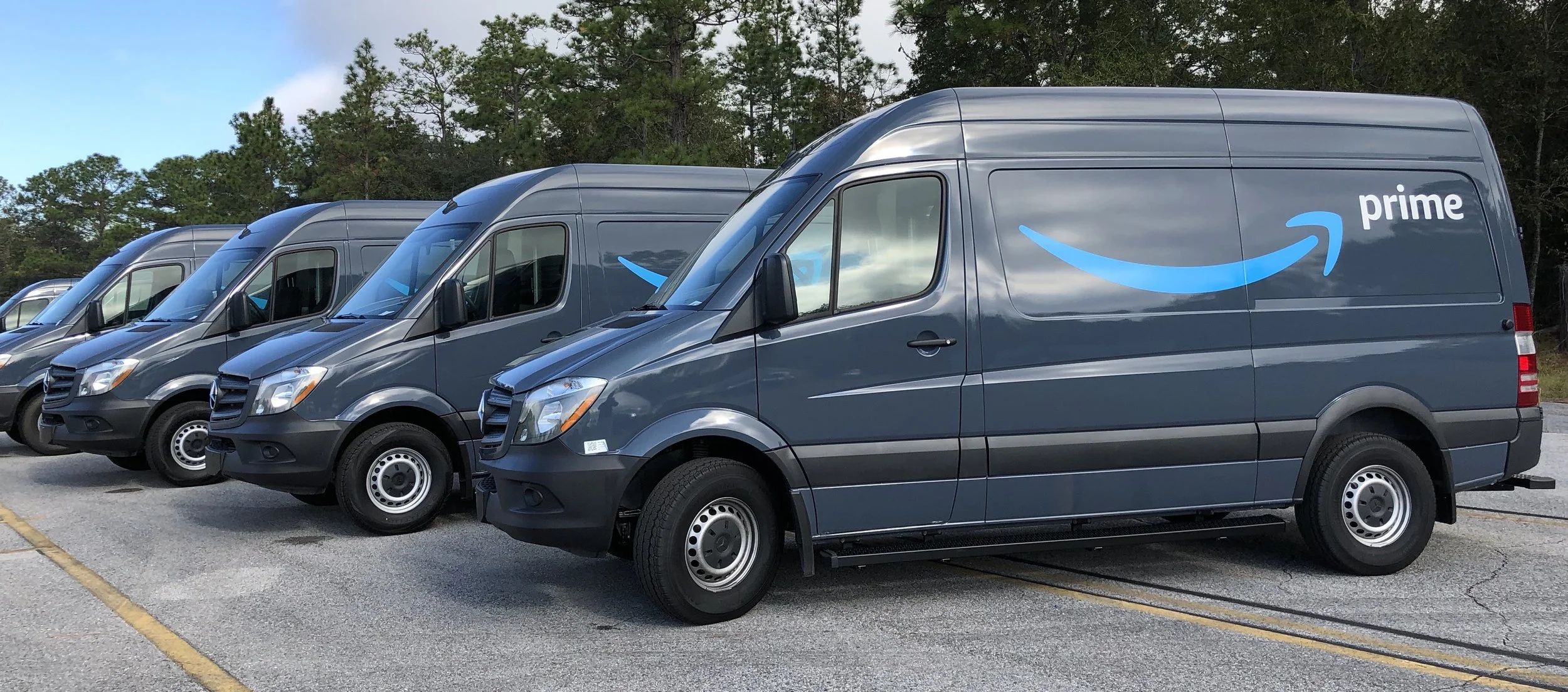
If you live in a mid-sized or large city, you have likely seen the most visible manifestation of Amazon’s low carbon strategy: the Rivian electric delivery van (EDV).
In 2019, Amazon’s then-CEO Jeff Bezos announced that the company was co-founding "The Climate Pledge," a commitment to reach net-zero carbon emissions across all its businesses by the year 2040—ten years ahead of the Paris Agreement’s target. As part of this pledge, Amazon led a massive $700 million investment into a then-little-known electric vehicle startup called Rivian.
Amazon didn't just buy off-the-shelf cars; they ordered 100,000 custom-built electric delivery vans to be deployed by 2030.
As of early 2026, the company is making significant headway. There are now over 30,000 of these electric Rivian vans silently delivering packages across thousands of U.S. cities, with the fleet having grown by a massive 50% in 2025 alone.
Traditional step-vans run on diesel fuel. They are loud, they emit thick exhaust, and because delivery drivers must constantly stop and start, the engines run highly inefficiently. The Rivian EDVs, on the other hand, have zero tailpipe emissions. This means no carbon dioxide is puffing into the atmosphere as they drive, and just as importantly, they don't release toxic smog-forming particulate matter into residential neighborhoods. They are also whisper-quiet, reducing urban noise pollution.
However, replacing a fleet of gas vehicles with electric ones is not as simple as buying new trucks. Amazon has had to build essentially a massive, private electrical grid. To keep these 30,000 vans running, Amazon has installed over 17,000 electric vehicle chargers at more than 120 delivery centers.
Beyond the Van: Cargo Bikes and Walkers
A massive electric van is great for the sprawling suburbs of Texas or Ohio, but what about the narrow, ancient streets of Paris, London, or the hyper-dense blocks of Manhattan?
To achieve low carbon delivery in dense urban centers, Amazon is turning to "micro-mobility." Instead of vans, the company has set up localized "micro-hubs." A larger vehicle will drop off a massive pod of packages at a central location in the city. From there, human delivery workers take over using electric cargo bikes (e-bikes) or modified pedestrian push-carts.
These e-bikes can weave through gridlocked city traffic, utilize bike lanes, and park easily on sidewalks. It is a low-tech, high-impact solution. By replacing a van with a fleet of cargo bikes, Amazon effectively reduces the immediate carbon emissions of that route to near zero, while simultaneously alleviating city traffic.
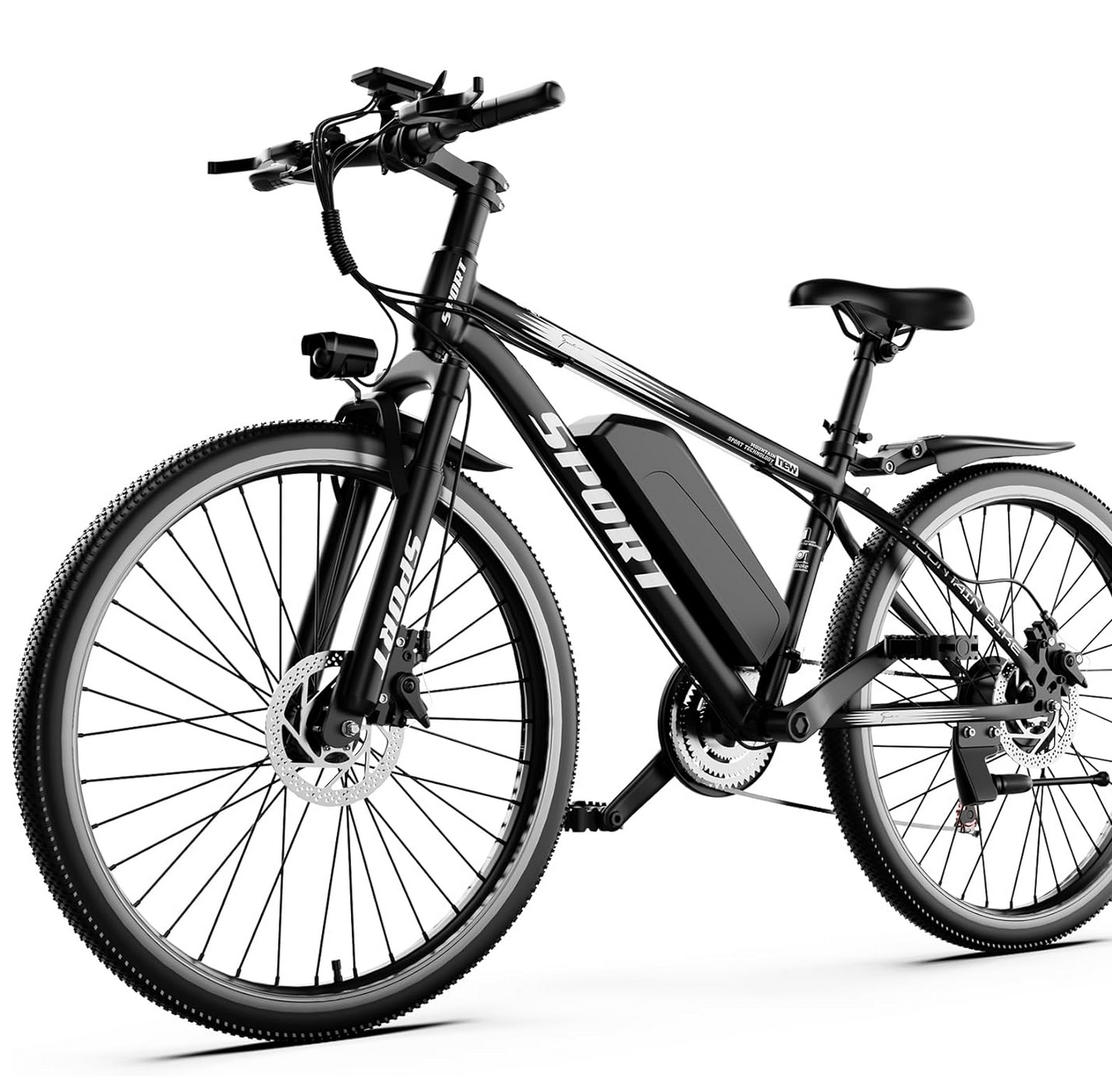
You can even get your own e-bike from Amazon - how meta.
"Amazon Day" and the Logistics Tetris
You don’t have to drive a delivery van to participate in low carbon delivery. In fact, Amazon has increasingly placed part of the responsibility on the consumer through the checkout screen.
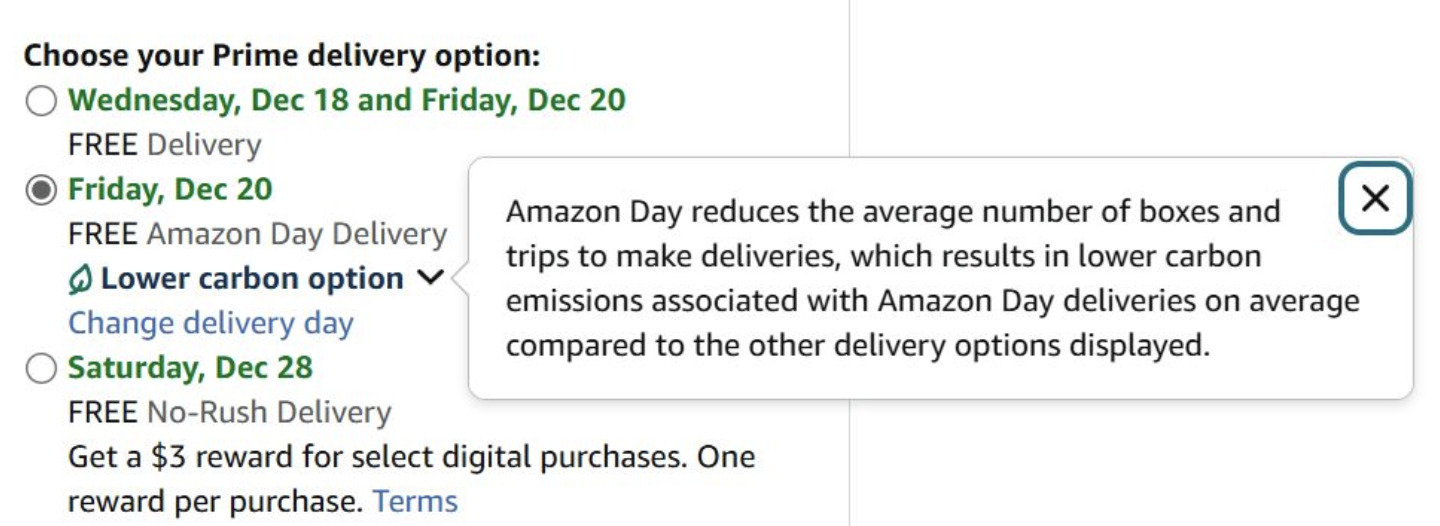
When you go to buy an item, you are often presented with options like "Amazon Day Delivery" or "Deliver in fewer boxes." Sometimes, Amazon will even offer you a small digital credit (like $1.50 toward a digital movie) to choose a slower delivery option.
To a layperson, it might seem strange. Why does waiting an extra three days save the environment?
It all comes down to the algorithm and the "Tetris" of logistics.
When you demand next-day shipping for a single tube of toothpaste, the logistics system has to prioritize speed over efficiency. That toothpaste is put on whatever truck is leaving the warehouse right now. If you order a book the next morning, a second truck has to drive to your house.
When you select "Amazon Day" (choosing a single day of the week for all your items to arrive), you give Amazon’s supercomputers a gift: time. Time allows the system to hold your toothpaste on a shelf until your book order comes in. It allows warehouse workers to pack both items into a single box. It allows the logistics software to perfectly pack a single delivery van with hundreds of packages going to your specific neighborhood on a highly optimized, fuel-saving route.
Fewer boxes mean less cardboard waste. Fewer trips mean less fuel burned.
Many consumers get frustrated when they click the "fewer boxes" option, only to receive three separate packages anyway. Why does this happen? The reality is that Amazon operates hundreds of different fulfillment centers. If your requested toothpaste is stocked in an Ohio warehouse, but your book is sitting in a Nevada warehouse, they cannot magically be put in the same box without one item being shipped to the other first. Sometimes, shipping them separately directly to you actually results in a lower overall carbon footprint than routing them to a middle-man packing facility.
This brings us to the biggest hurdle in Amazon’s quest for low carbon delivery: the expectation of extreme speed.
While the "Last Mile" Rivian van might be electric, we have to ask how the package crossed the country to get to that van in the first place. This is known as the "Middle Mile."
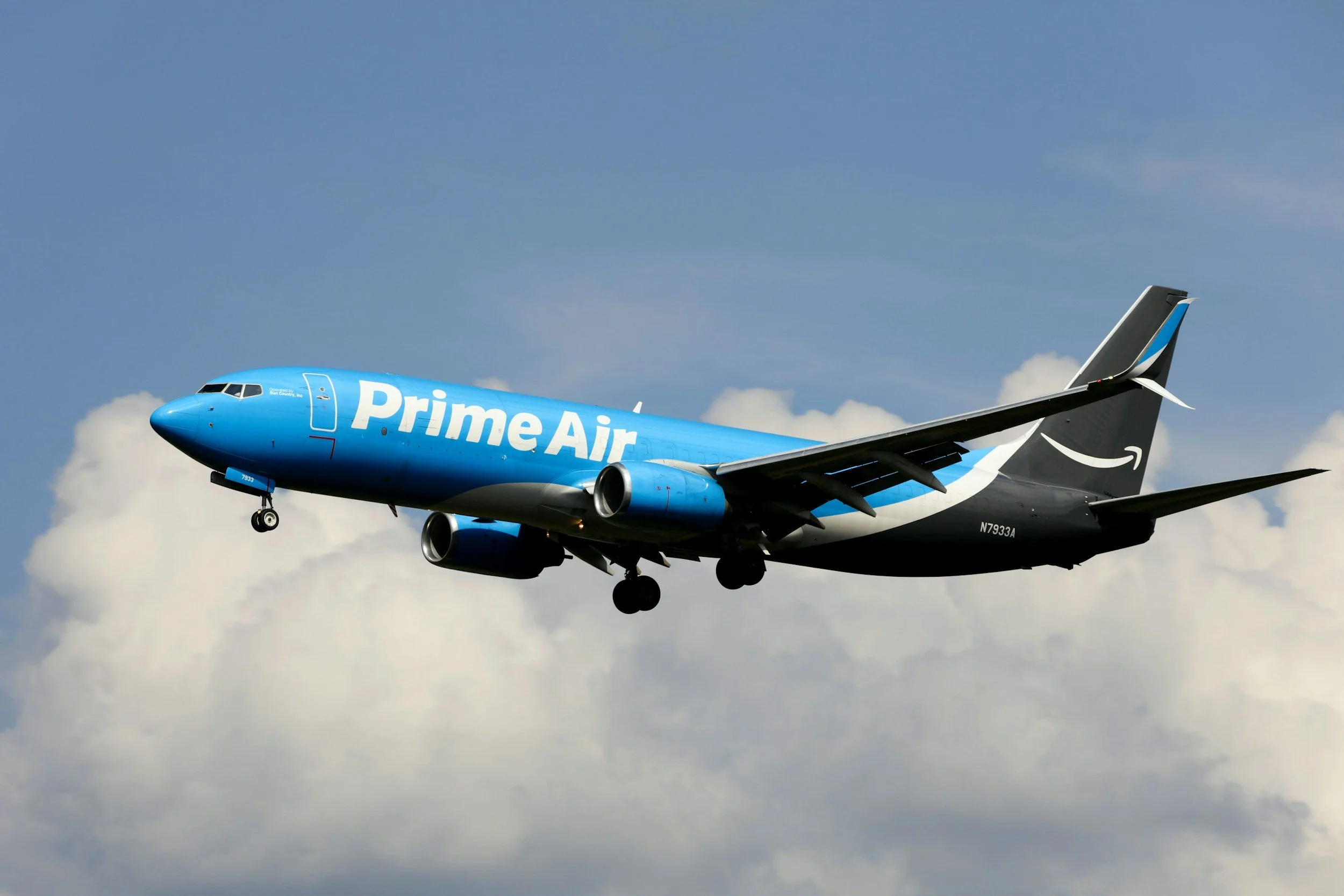
If you demand 1-day or 2-day delivery across the country, that package cannot travel by train or truck. It must fly. Amazon operates a massive fleet of cargo jets, and aviation is one of the most carbon-intensive industries on the planet. Currently, there are no battery-electric cargo planes capable of flying cross-country. Jets burn immense amounts of fossil fuels.
Furthermore, to guarantee 1-day delivery, planes and long-haul trucks sometimes have to leave their facilities only partially full to meet the delivery deadline. Flying a half-empty plane just to ensure someone gets a pair of socks on time is an environmental nightmare.
Therefore, a truly "low carbon delivery" is almost impossible if it requires air freight. The faster you want your item, the higher the carbon footprint will inevitably be.
Greenwashing vs. Genuine Progress
Given the massive scale of Amazon's operations, a critical question arises: Is this entire "Low Carbon" initiative genuine, or is it just "greenwashing"?
Greenwashing is a term used when a company spends more time and money marketing itself as environmentally friendly than it does actually minimizing its environmental impact.
Critics point out that Amazon’s business model is fundamentally built on hyper-consumption—encouraging people to buy things they often don't need, shipped across the world in disposable packaging. Furthermore, while Amazon has made incredible strides in efficiency, their absolute carbon emissions actually rose by roughly 18% between 2019 and 2021 as their business boomed during the pandemic. Critics argue that while the company is emitting less carbon per package, the sheer volume of packages means they are still polluting more overall.
Additionally, a portion of Amazon’s "net-zero" pledge relies on carbon offsets. This means that instead of perfectly eliminating all their own pollution, they might pay to protect a forest halfway around the world to "cancel out" the emissions from their cargo planes. Many environmentalists argue this is a financial loophole that allows companies to keep burning fossil fuels.
On the flip side, it is impossible to ignore the sheer scale of Amazon's investments. They are currently the largest corporate buyer of renewable energy in the world, investing billions in massive solar and wind farms to power their operations. Their order of 100,000 Rivian vans essentially single-handedly jump-started the commercial electric vehicle industry. They are forcing the entire logistics industry to adapt and modernize.
Amazon is essentially attempting to change the tires on a massive truck while it is barrelling down the highway at 100 miles per hour. It is a messy, imperfect process, but the tangible changes—like solar-powered warehouses and 30,000 EVs on the road—are undeniably real.
The Packaging Paradox
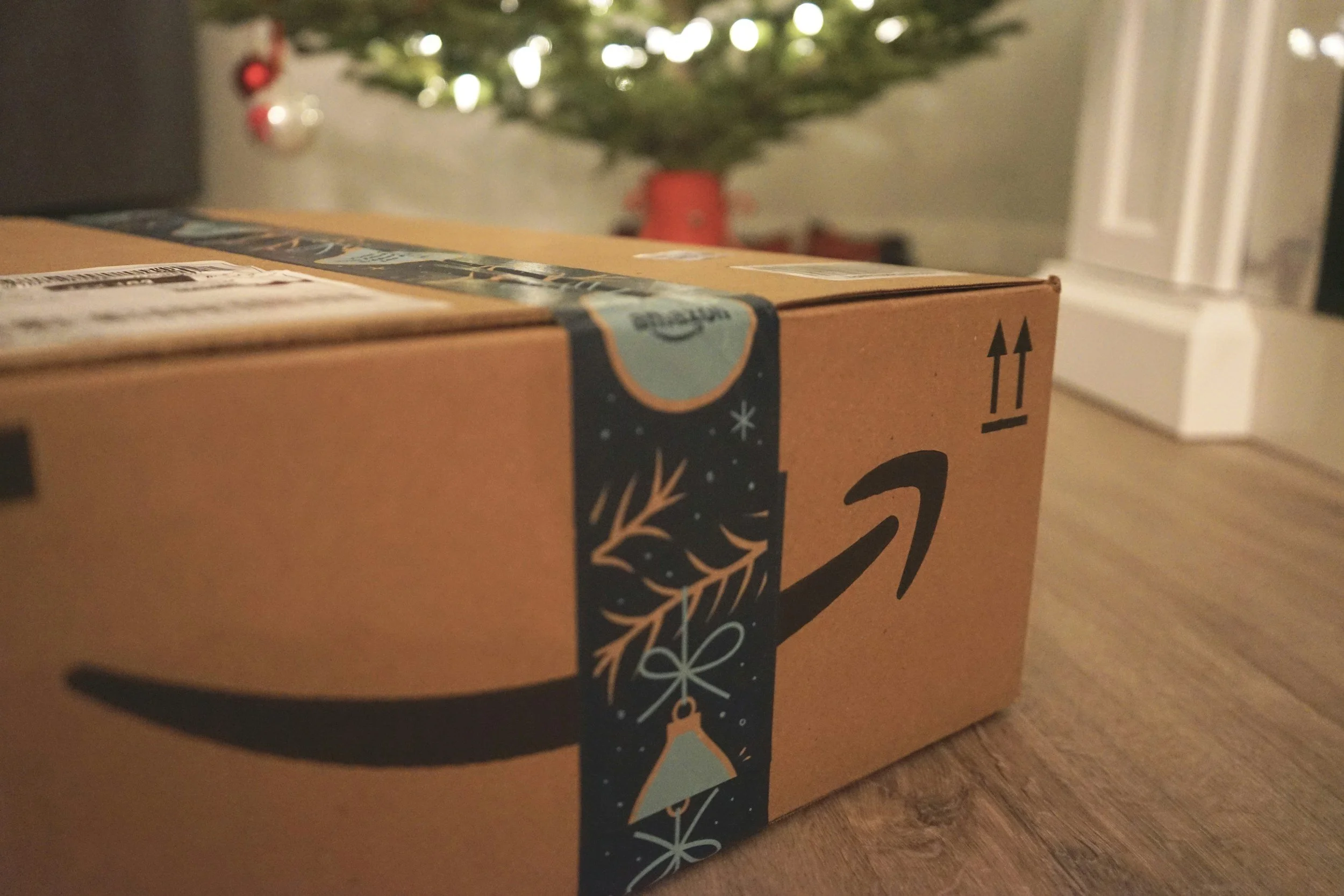
You can't discuss Amazon delivery without mentioning the packaging. For years, customers have complained about the absurd amount of waste generated by online shopping—like receiving a tiny thumb drive nestled inside a massive cardboard box stuffed with plastic air pillows. In 2019, one report estimated that Amazon generated enough plastic packaging waste to circle the Earth 500 times.
A delivery van can be 100% electric, but if it is delivering single-use plastics destined for a landfill, the delivery is hardly "green."
Amazon has recognized this criticism and has heavily pushed its "Frustration-Free Packaging" program. They are actively phasing out plastic padded mailers and air pillows in favor of fully recyclable paper and cardboard alternatives. They are also increasingly utilizing machine learning to accurately match the size of the product to the size of the box, reducing wasted space. However, due to the sheer volume of their global shipping, packaging waste remains a monumental challenge.
What You Can Do as a Consumer
While Amazon bears the primary responsibility for cleaning up its supply chain, the algorithm is ultimately driven by consumer behavior. If you want to ensure your deliveries are genuinely low-carbon, here are a few practical steps you can take:
Patience is a virtue for the planet: Only use next-day or same-day shipping when it is an absolute emergency. By accepting a 3-to-5 day shipping window, you allow logistics networks to use efficient ground transportation (like trains and full trucks) rather than high-polluting airplanes.
Embrace Amazon Day: Make it a habit to select the "Amazon Day Delivery" option at checkout. Consolidating your deliveries into one day a week drastically reduces the number of trips vans have to make to your neighborhood.
Keep a running cart: Instead of buying items one at a time the moment you think of them, keep items in your shopping cart for a few days. Check out once you have a batch of items.
Consider the source: If you just need a single tube of lip balm or a pack of batteries, consider walking or taking transit to a local store. Sometimes, the lowest carbon delivery is the one you don't order online at all.
So, what does Amazon’s Low Carbon Delivery really mean?
It means a massive, multi-billion-dollar transition is underway. It means tens of thousands of custom electric vans replacing noisy, polluting diesel trucks on our local streets. It means complex software working furiously to fit more packages into fewer boxes to save fuel.
But it also means facing the harsh reality that true sustainability is incredibly difficult to achieve in a business model built on instant gratification. Electric vans are a fantastic step forward for the "last mile," but they don't solve the carbon emissions of the cargo planes, the manufacturing of the goods, or the mountains of cardboard generated every day.
Amazon’s climate initiatives are neither a total greenwashing scam nor a perfect environmental utopia. They are a massive, imperfect, but highly necessary step in the right direction. Ultimately, reaching a truly sustainable future will require both the world's largest retailers to change how they ship, and everyday consumers to change how they shop.