Is New Balance Living Up To Its Name On Sustainable Practices?
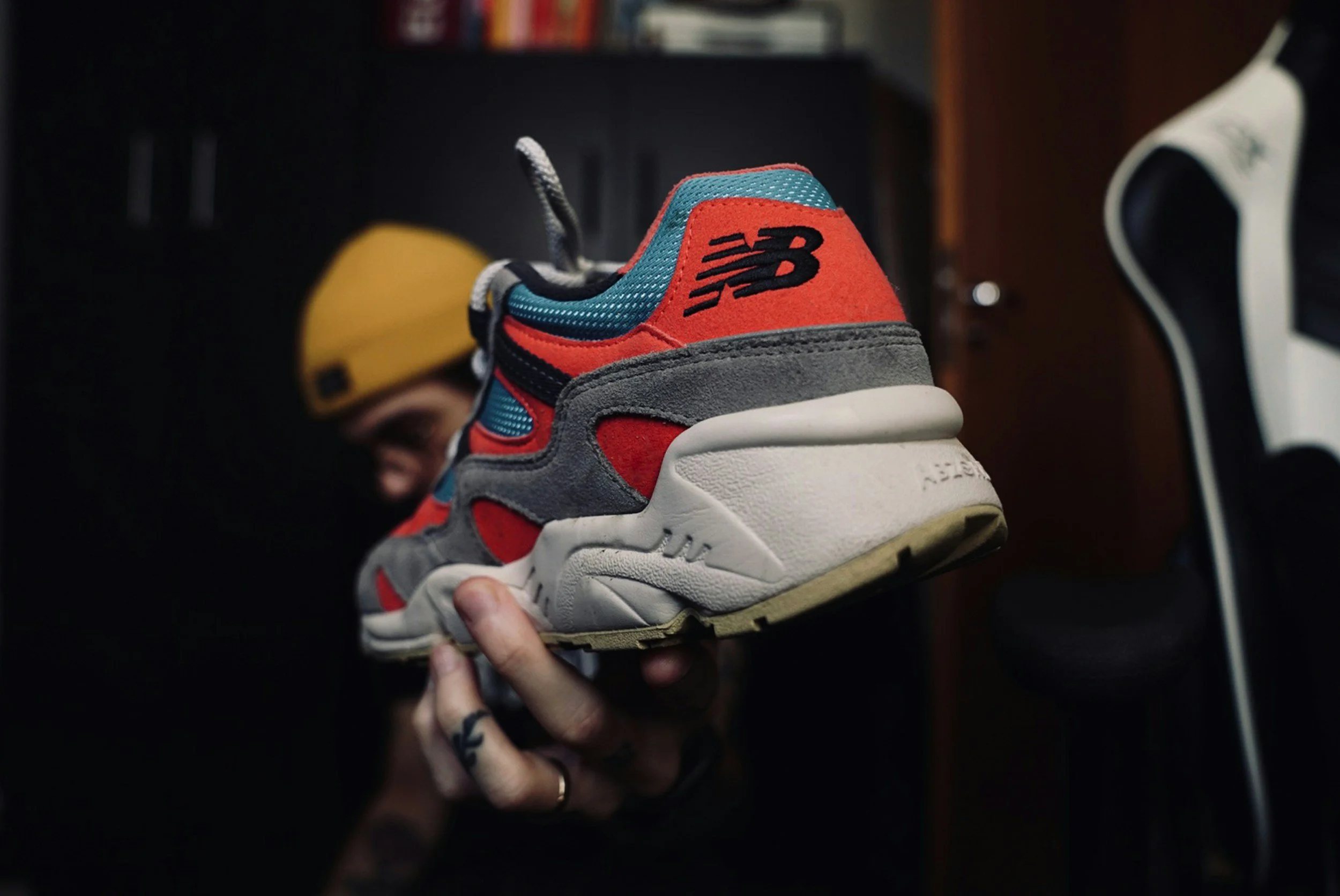
Ever wonder what goes into making your favorite pair of New Balance sneakers, besides just the cool design and comfy fit? In today’s world, big companies like New Balance aren't just graded on their sales; they get a report card on their impact on the planet and the people who make their products. This is what their 2024 Sustainability and Impact Report is all about.
The Climate Race: Winning Some, Still Training Hard
New Balance has committed to major climate goals, which have been approved by the Science Based Targets initiative (SBTi)—meaning their goals are aligned with limiting global warming to 1.5°C. Their overall climate action strategy focuses on six key areas, including shifting to renewable energy, using better materials, and advocating for smart environmental policies.
Successes: Cleaning Up Their Own House
Imagine you have a carbon footprint that comes from three sources: your car, your house, and everything you buy. Companies measure this in "Scopes." New Balance has made big strides in the areas they control directly:
Slamming the Brakes on Emissions (Scope 1 & 2): Since 2019, New Balance has successfully reduced the emissions from its own operations—like their factories and offices—by an impressive 34%. This is a major sign that their focus on energy efficiency is paying off.
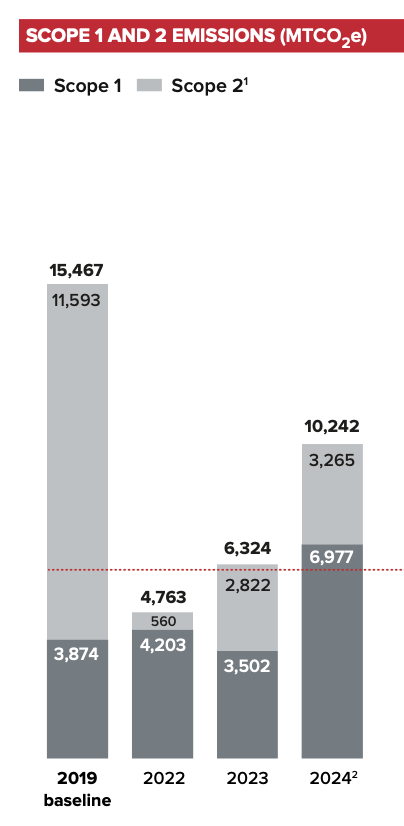
New Balance is incredibly close to its goal of using 100% renewable electricity for its owned operations by 2025, reaching 90% progress this year.
In their owned and top-tier footwear factories, New Balance is fantastic at keeping trash out of landfills, diverting 87% of all waste. This puts them very close to their goal of 100% waste diversion by 2025.
Recognizing that shipping products globally creates a lot of pollution, New Balance is part of a coalition called ZEMBA (Zero Emission Maritime Buyers Alliance). They helped secure a deal for future shipping services that will aim for a 90% reduction in greenhouse gases by using low-carbon fuels.
Major Challenge: The Shadow of Scope 3 Emissions
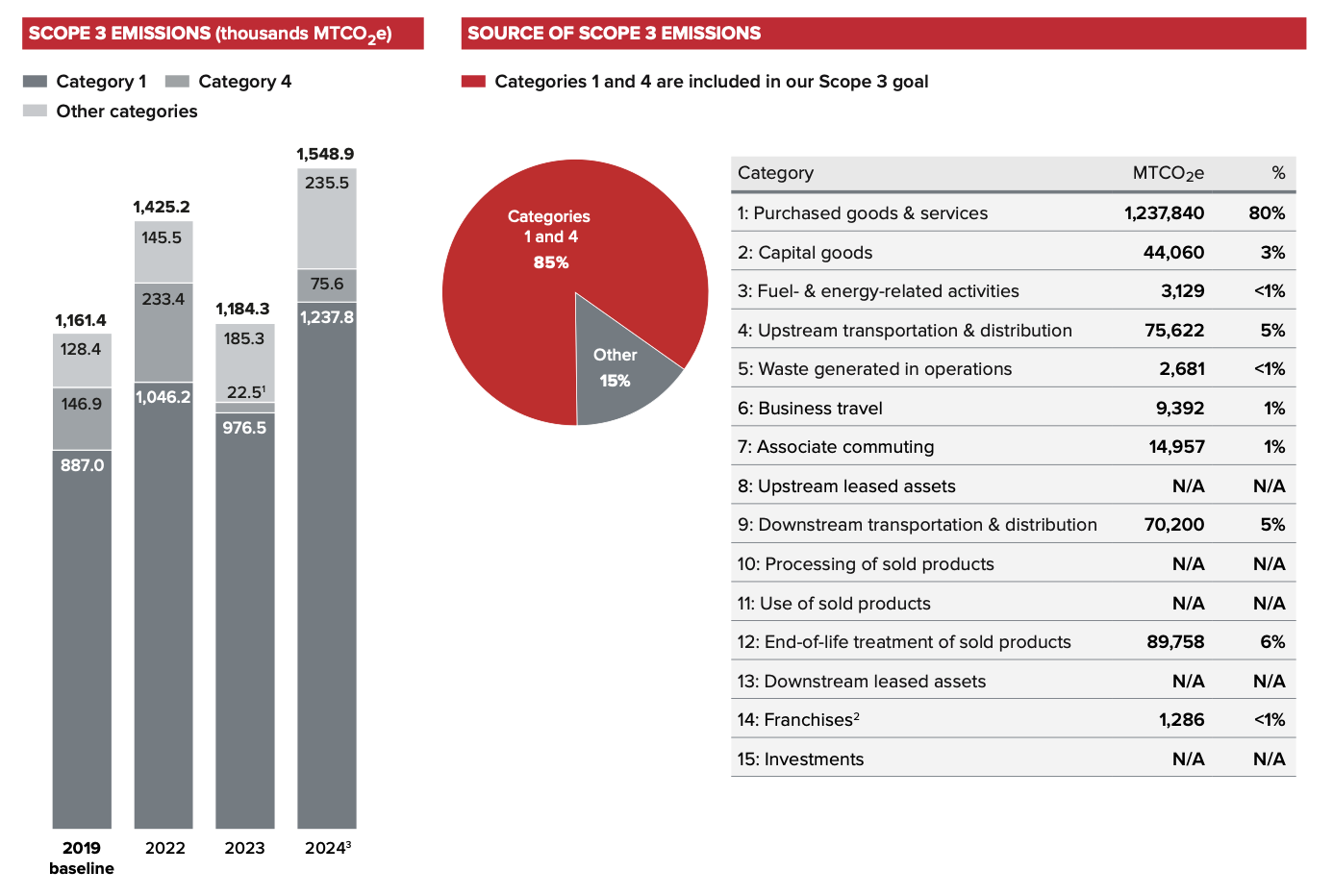
Scope 3 Emissions
While New Balanceis making good progress in their own facilities, the company faces a massive, complex problem that most fashion and footwear brands struggle with, Scope 3 emissions.
Scope 3 emissions come from activities they don’t directly own or control, like the manufacturing of the raw materials (polyester, leather, foam) and the transportation of goods. This category accounts for an estimated 80–90% of their total carbon footprint. This is the same challenge their competitors like Crocs and Nike has, which would likely benefit from a coalition focused on this issue.
In 2024, New Balance’s total Scope 3 emissions actually increased by 27% compared to the 2019 baseline. This is a sign that as the company grows its business, the environmental impact of its materials and suppliers is also growing rapidly.
To hit their 2030 goal of a 50% reduction in Scope 3, they have to dramatically accelerate their efforts to use lower-impact materials and get their suppliers to switch to clean energy.
Materials and Circularity
The goal of a circular economy is to break the old "take-make-waste" cycle by keeping products and materials in use for as long as possible. New Balance is trying to make its shoes durable, repairable, and recyclable.
Key Successes in Design
New Balance is nearly at its goal for switching to "preferred materials," which are sourced in ways that are better for the environment and for people. They have reached 93% preferred leather and 91% preferred cotton. This means they are prioritizing responsibly-certified sources.
They are making good headway in eliminating hazardous chemicals from their products. They are 77% of the way to their goal to eliminate them by.
The company is getting smarter about factory waste. In 2024, they successfully increased the amount of recycled rubber used in some of their sole compounds to 10%. One supplier even invested in special recycling equipment to handle the rubber in-house, reducing the need to buy new materials and saving energy.
This consumer-facing program gives products a second life through resale, repair, and donation. New Balance assessed over 60,000 items, with 80% deemed suitable for listing, actively keeping functional products out of the landfill.
Challenges in Innovation
Making the thick, foamy parts of the shoe (the midsole and outsole) with preferred, low-impact materials is proving to be a major technical challenge. They need to hit 80% for midsoles and 90% for outsoles by 2030, but they are currently at only 39% and 40% respectively. This is an area where innovation needs to seriously speed up.
New Balance wants 25% of their recycled fibers to come from textile waste (old clothes or factory scraps) by 2030, but they are only at 8% right now.
It’s easy to recycle plastic bottles into new polyester, but it’s much harder to turn a piece of old fabric back into high-performance shoe material.
People, Communities, and Fair Play
The “People” part of the report is about taking care of their associates, ensuring fair conditions for all workers in their supply chain, and giving back to communities.
Key Successes in Social Impact
New Balance is one of the few major shoe companies to own and operate its own factories in the U.S. and U.K. (the "MADE" factories). They are strengthening this commitment, moving associates to an expanded, state-of-the-art facility in Maine and finalizing construction on a new factory in Londonderry, New Hampshire, that will open in early 2026. This is a massive investment in local jobs and craftsmanship.
The New Balance Foundation (NBF) had a huge year. They aimed to donate $11 million to non-profits but actually gave over $12.2 million.
The non-profits funded by the NBF helped over 25 million individuals in 2024, significantly exceeding their goal of 15 million. Crucially, 70% of the people served were from communities below the poverty line, showing a strong focus on high-need areas.
New Balance is on track to collect data and measure progress toward a living wage (a wage high enough to cover basic needs, not just minimum wage) for all its strategic suppliers by 2026. This is a critical first step toward making sure factory workers are compensated fairly.
Challenges in the Supply Chain
One of the company’s biggest social challenges is providing training and education for personal and career development to women workers in their supplier factories. Their target is 100,000 women by 2027, but they have only reached 11,000 so far in 2024. This part of the mission needs a major boost.
While they are working to ensure workers can speak up and participate in factory decisions, only 58% of Tier 1 workers currently have access to a workplace engagement program. They must reach 100% by 2027.
The Never-Ending Finish Line
New Balance’s 2024 report shows a company that is serious about its values—making huge strides in community giving, cleaning up its own energy use, and pioneering better materials like preferred leather and cotton. They are committed to their craft, investing in U.S. manufacturing, and making progress on fair labor practices.
But the report also clearly lays out the most difficult problems facing the entire fashion industry: a rapidly increasing Scope 3 carbon footprint, the technical difficulty of recycling textile waste and creating green shoe foam, and the slow pace of empowering women workers in the supply chain.
Sustainability isn't a goal you reach and then stop; it's a constant race for better solutions. New Balance is on the track, and for high schoolers who care about the future of the planet and the people who make your clothes, it’s important to watch their progress, celebrate their wins, and hold them accountable for the challenges they have yet to overcome.