How British Petroleum’s Carbon Footprint Calculator Set Us Up For Failure On Climate Action
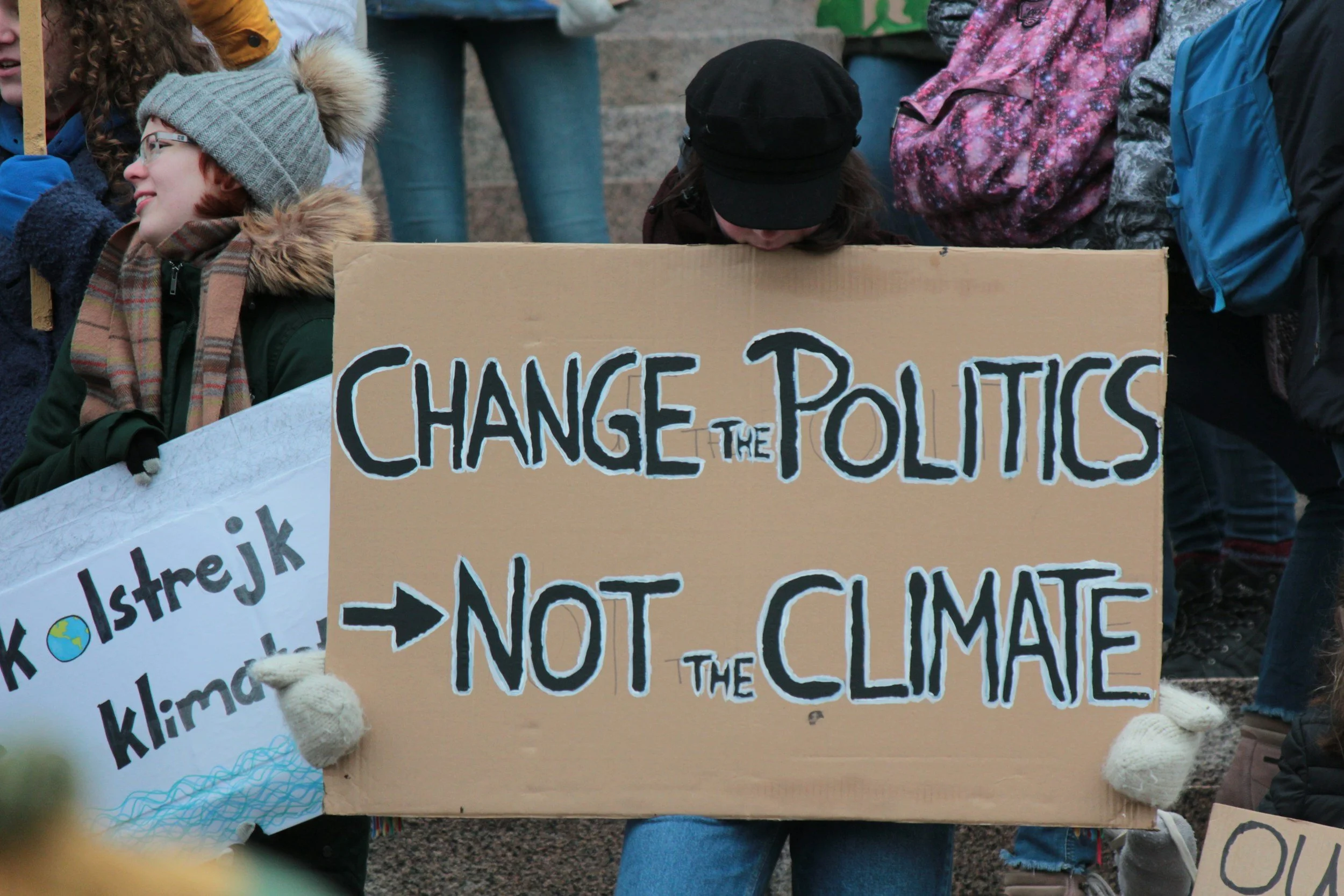
If you’ve ever stood over a set of recycling bins, agonizing over whether a plastic cup goes in the blue or green bin, and wondering if your choice is actually going to save the melting ice caps—you are not alone. Many of us feel a heavy burden to fix the climate crisis through our personal choices.
But a recent 2026 study published in Energy Research & Social Science by researchers Gulnaz Anjum and Mudassar Aziz asks a tough question: Are we being set up to take the blame for a system we don’t control?
For decades, we have known that climate change is a massive, global problem requiring structural changes like transitioning to renewable energy and regulating heavy industries. However, in recent years, there has been a massive shift in how we talk about climate action. The focus has increasingly moved away from what governments and fossil fuel companies are doing, and onto what you are doing.
Researchers call this the "individualization of responsibility." This means that climate change is frequently framed in public conversations and media as a problem that can be solved if we all just make better personal choices.
To understand how this happened, we have to look back at the early 2000s. Corporate actors intentionally promoted narratives about individual responsibility to deflect pressure away from themselves. We saw this in advertising, and still do. That’s why actions are being taken to reduce greenwashing.

One of the most famous examples comes from British Petroleum (BP), one of the largest fossil fuel companies in the world. In 2004, BP launched a "carbon footprint" calculator. Scholars widely point to this calculator as a strategic public relations move to shift accountability away from the fossil fuel industry and onto the everyday consumer. This was a massive pivot in climate communication, moving the spotlight from systemic industrial pollution to individualized guilt.
Today, this trend continues. We see it in marketing campaigns pushing "sustainable choices," social media movements like #FlightShame telling us the impacts of flying on emissions, and the rise of personal carbon tracking apps. You are told that driving less, eating less meat, and buying green products are the ultimate solutions.
The "Responsibility-Power Gap": Why Doing Your Best Feels So Hard
When you are constantly told to make eco-friendly choices, it can feel empowering. But it can also lead to deep frustration when you realize how hard those choices actually are to make. The researchers identify this feeling as the "responsibility-power gap."
In a nutshell, responsibilization is a political and economic strategy where everyday citizens are tasked with resolving systemic issues through their ethical consumer choices. But there is a massive catch.
Individuals are given the moral responsibility to lower emissions. However, they are not given the power to change the massive systems—like energy grids, public transportation networks, and housing infrastructure—that actually determine the vast majority of our emissions.
Responsibility is handed over, but the power and resources needed to fulfill that responsibility are not.
Despite the massive chunk of emissions linked to households, behavioral interventions (like nudging people to recycle or turn off lights) usually only result in low single-digit percentage drops in emissions. The strongest effects are seen in easy, one-time actions like recycling, while it is much harder to get people to change high-impact habits like flying or driving.
Imagine being told it is your job to stop a flood, but you are only given a teaspoon, while the city refuses to build a dam. That is the responsibility-power gap.
This gap is incredibly unfair, especially for marginalized and low-income communities. Making "green choices" often requires physical infrastructure, affordability, and reliability. Low-income communities might not have access to clean energy infrastructure, energy-efficient housing, or reliable public transit.
Because of these structural barriers, living a low-carbon lifestyle is often structurally unavailable to them, rather than just undesirable.
When climate campaigns focus solely on individual choices, they end up placing moral burdens on people who have the least capacity to change, while those with the most resources escape scrutiny.
If the System is the Problem, Does Individual Action Even Matter?
Reading about corporate blame and wealth inequality might make you want to throw your hands in the air and give up. If massive companies and ultra-rich individuals are the main culprits, why should you even bother taking the bus or eating a plant-based burger?
The researchers are very clear: Individual behavior is still absolutely essential.
While corporations control production, individual consumer choices influence demand and send market signals that shape these systems over time.
People who adopt sustainable practices in their own lives often develop a stronger environmental identity. This leads to a higher likelihood of voting for climate-friendly politicians, joining civic movements, and supporting ambitious climate regulations.
Visible actions, like putting solar panels on a roof or biking to work, help change social norms. When people see their neighbors doing something, the perceived barriers drop, and "green" actions become mainstream.
The problem isn't that individual action is useless. The problem is assuming individual action alone can achieve the deep decarbonization our planet needs.
The RPJ Framework: Responsibility, Power, and Justice
To fix how we approach climate change, the authors propose a new way of looking at the problem called the Responsibility-Power-Justice (RPJ) nexus. This framework helps us see how climate policies either empower us or unfairly burden us.
The framework has three main parts:
Responsibility Displacement: This happens when governments and corporations actively push the blame and accountability onto isolated individuals without giving them the tools to actually fix the problem.
Power Asymmetries: This points out the unfair balance of power. Individuals are given the "power" to choose between a plastic or paper straw, while corporate elites hold the structural power to shape global energy grids and market rules.
Justice Failures: Individualized climate strategies often ignore history and inequality. They direct anger and accountability at everyday people while ignoring the massive, historical emissions of wealthy nations and the top 1%.
6 Steps to Actually Fix the Problem
We cannot rely entirely on individuals changing their habits, but we also cannot wait around for giant bureaucracies to magically fix the infrastructure without public pressure. The researchers argue that we need an integrated approach. Individual choices and systemic changes must work together.
The paper outlines six key strategies to integrate systemic and individual climate action:
Target High Emitters: We have to start where the impact is biggest. Governments need to implement strict regulations, emission caps, and fossil fuel phaseouts. They must hold the highest emitters accountable with things like luxury carbon taxes.
Support Infrastructure: We cannot expect people to make low-carbon choices if the options don't exist. We need massive investments in public transit, affordable clean energy, and sustainable food systems. Making green choices should be easy and cheap for everyone.
Integrate Behavioral Insights: We should use behavioral psychology to help design better policies. Things like making the "green" energy option the default on your utility bill can help. However, these "nudges" should be paired with real regulations, not replace them.
Encourage Civic Engagement: Climate action needs to move beyond just buying different things; it needs to be about community participation. We should support neighborhood energy co-ops and citizen assemblies. This turns isolated consumers into empowered political actors.
Frame for Justice: Climate policies must be fair. If a policy raises energy prices, the government must provide targeted subsidies to protect vulnerable and low-income populations from bearing the brunt of the cost. Action must focus on shared benefits like cleaner air and job creation.
Track Progress: We need transparent tracking of how infrastructure investments are actually leading to changes in human behavior, and vice versa. It is important to communicate this story clearly so people see that their actions, combined with system changes, are actually working.