Does Saving Endangered Species Have A Dark Side?
Imagine you have spent decades fighting to save a beloved animal from the brink of extinction. You’ve raised millions of dollars, lobbied governments for protected lands, and recruited armies of volunteers. Finally, the day comes when the global authority on wildlife declares your animal is no longer in imminent danger. You should be popping champagne, right?
In the complex world of wildlife conservation, this kind of success is called "downlisting," and it is surprisingly controversial.
A recent study published in Conservation Biology titled "Downlisting and recovery of species assessed by the IUCN" dives deep into the unexpected challenges that arise when a species starts to recover. For high-profile flagship species, a positive change in status can spark intense debate, risking the very funding and legal protections that saved them in the first place.
The Rarity of Genuine Recovery
The IUCN Red List of Threatened Species is the gold standard for tracking global extinction risk. Researchers, governments, and conservationists rely on it to figure out which animals and plants need the most urgent help.
To understand the impact of downlisting, we first need to look at the numbers. They reveal a sobering picture of our planet's biodiversity, making every single success story incredibly precious.
As of 2024, the IUCN has assessed an astonishing 163,040 species.
Over 45,000 of those species are classified as threatened, meaning they fall into the Critically Endangered (CR), Endangered (EN), or Vulnerable (VU) categories.
These threatened categories account for more than a quarter of all assessed species.
Between 2007 and 2024, only about 1% of assessed species changed categories each year.
Of those annual changes, a mere 5% to 33% were due to a genuine change in the population size; the rest were due to things like new scientific data or changes in taxonomy.
When we look strictly at genuine population changes from 2007 to 2024, the data is heavily skewed toward decline. Out of all assessed species, 1,511 experienced a genuine status change.
A heartbreaking 85% of those were "uplisted" to a higher extinction risk category. Only 15% were downlisted due to genuine improvement. In total, a mere 222 species were downlisted during this timeframe.
Ultimately, despite the massive number of species monitored, only about 1 in 1,000 have been downlisted because their populations genuinely improved.
Why Success Sparks Controversy
If downlisting is so rare, why isn't it always universally celebrated? The primary role of the IUCN is to provide an objective assessment of extinction risk, meaning it must remain independent of public outcry. It strictly follows a "5-year rule," meaning a species cannot be downlisted until it has failed to meet the criteria for its higher threat category for at least five consecutive years.
Even with these careful rules, when a high-profile species is downlisted, it can severely disrupt well-established conservation programs. Moving to a lower risk category can trigger a domino effect of unintended consequences.
The Threat of Lost Funding
A major fear among conservationists is that downlisting will cause a sudden drop in financial support. Many major grants and conservation funds explicitly prioritize species in the Critically Endangered or Endangered categories. For instance, programs like the Conservation Leadership Programme and the Mohamed bin Zayed Species Conservation Fund specifically target highly threatened taxa.
There is a genuine fear that downlisted species will face drastic funding cuts, even though they still require active management to survive. If conservation efforts are withdrawn too quickly, a conservation-dependent species could experience a catastrophic population collapse.
Weakened Legal Protections
Many national governments use the IUCN Red List to inform their own local wildlife protection laws. If a species is downlisted internationally, local governments might follow suit, leaving prosecutors and park rangers with a weaker legal foundation to protect the animal from poachers or developers. A relaxation of these laws could cause threats to escalate rapidly.
Losing the "Umbrella" Effect
Charismatic animals are often considered "umbrella species". Because they require large, healthy habitats, protecting them naturally protects all the other, less famous plants and animals living in the same ecosystem. Endangered species frequently serve as the focal point for blocking destructive infrastructure projects. If the star species of an ecosystem is downlisted, it may no longer trigger the same strict environmental scrutiny during urban or industrial development. This makes it harder to justify new protected areas or maintain existing ones.
Case Studies: The Good, the Bad, and the Complicated
To understand how this plays out in the real world, the researchers analyzed four charismatic "flagship" species in Asia. Each of these animals faced steep population declines but are now showing signs of recovery thanks to intense human intervention.
The Giant Panda The giant panda is one of the most famous conservation successes in history. Following immense efforts in habitat protection, forest restoration, and anti-poaching enforcement, the panda was downlisted from Endangered to Vulnerable in 2016. However, critics were highly vocal, arguing that the downlisting could reduce necessary funding and undermine the ongoing support the species desperately needs.
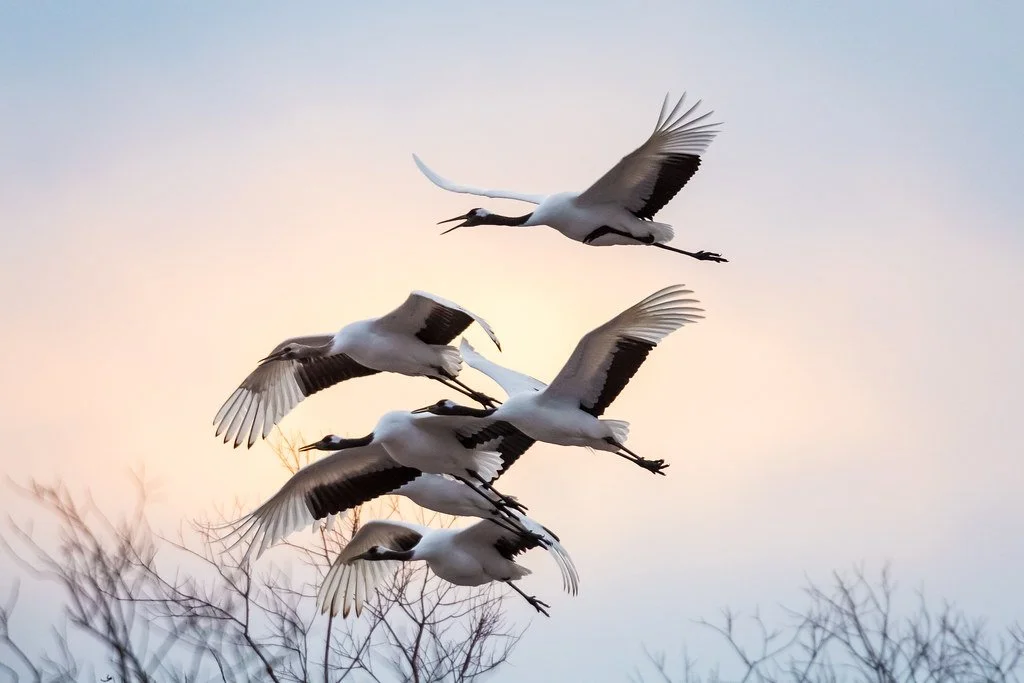
The Red-Crowned Crane In 2021, the red-crowned crane was downlisted from Endangered to Vulnerable. This sparked immediate controversy. The overall population decline had slowed, largely because of a growing, non-migratory population in Japan. But the Japanese population relies heavily on human intervention, like supplementary feeding. Meanwhile, the Chinese population of cranes had plummeted by over 90% in recent decades. Critics worried that the downlisting created a false and misleading impression that the species as a whole was safe.
The Black-Faced Spoonbill This migratory bird was listed as Critically Endangered in 1994, downlisted to Endangered in 2000, and is currently being proposed for a further downgrade to Least Concern. While its population has steadily increased due to massive international efforts, the proposal has sparked intense debate. Critics point out that the bird's threatened status was the only reason key breeding grounds were protected from military activities and development. Furthermore, the birds are now highly concentrated in limited habitats, making them incredibly vulnerable to avian influenza and green energy infrastructure developments like wind farms. Assigning them a "Least Concern" status could drastically underestimate these looming threats.
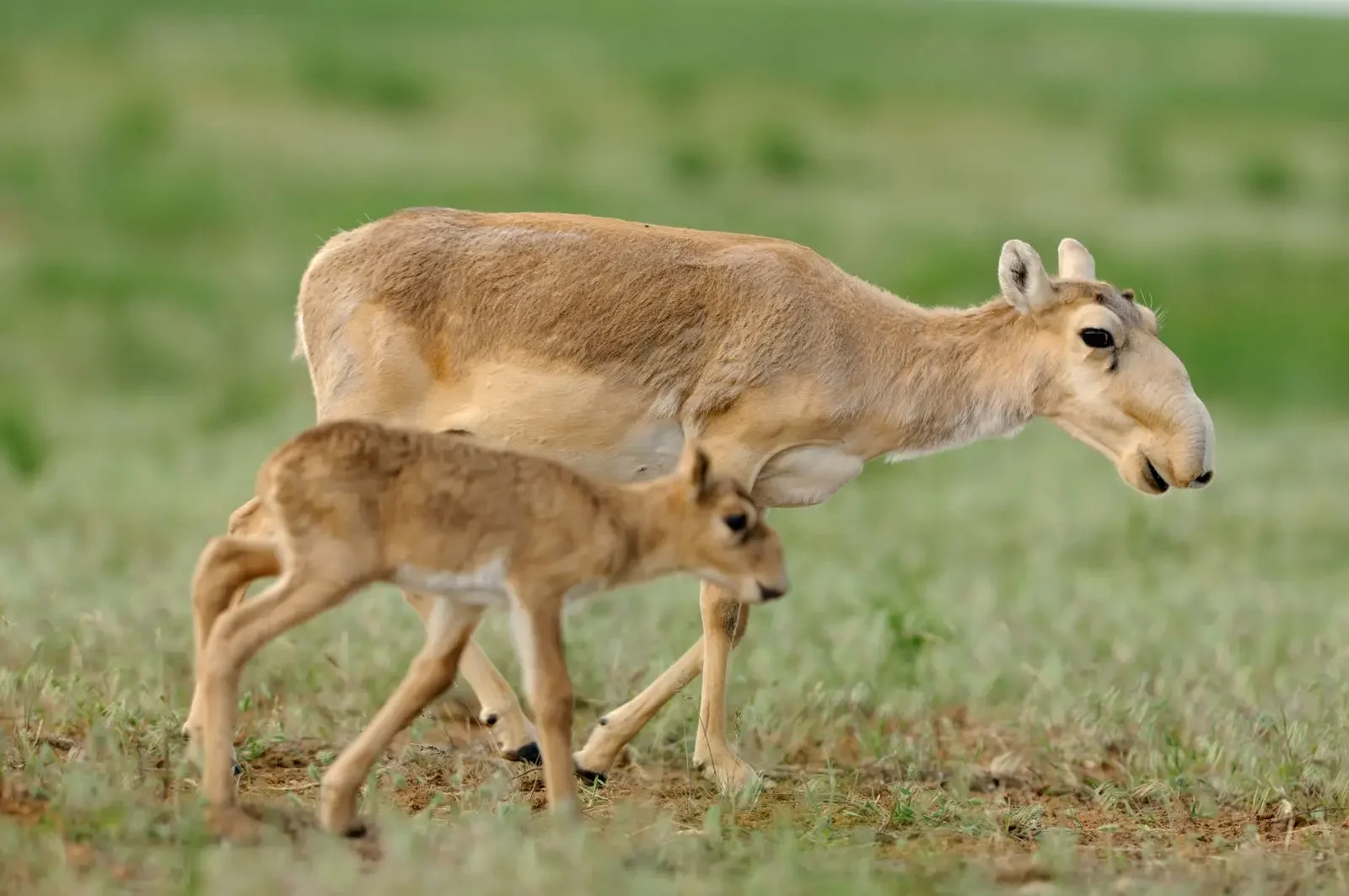
The Saiga Antelope (A Success Story) Not all downlistings end in fiery debate. The saiga antelope was once on the brink of extinction due to disease, habitat loss, and intense poaching. Thanks to massive conservation interventions led by the Kazakh government, the population rebounded rapidly. In 2023, it was downlisted from Critically Endangered directly to Near Threatened. Unlike the other cases, this transition was smooth and widely accepted. Why? Assessors engaged local experts, donors, and stakeholders early in the process. By keeping everyone in the loop, the conservation community built consensus and ensured the downlisting was effectively communicated as a success, rather than a reason to abandon the species.
Smarter Metrics and Sustainable Support
How do we celebrate species recovery without accidentally pulling the rug out from under them? The researchers highlight a few critical solutions.
First, the conservation community needs to pivot toward sustainable, long-term funding models. Donors and governments must prioritize ecosystem resilience and habitat restoration over short-term population gains. If we rely strictly on expensive, intensive human interventions—like captive breeding—without fixing the animal's natural habitat, the population will collapse the moment the funding stops.
Second, we need to utilize new tools to measure success. While the IUCN Red List measures extinction risk, it does not explicitly indicate how dependent a species is on ongoing human help. To fix this blind spot, the IUCN developed the Green Status of Species (GSS).
Unlike the Red List, the GSS evaluates the actual progress of a species' recovery. It assigns a "species recovery score" from 0% to 100%. This allows scientists to differentiate between an animal that is fully ecologically restored and an animal that has healthy numbers but remains highly dependent on conservationists.
For example, the black-faced spoonbill may have improving numbers, but its GSS assessment gave it a recovery score of only 35%. The GSS classified the bird as "largely depleted" with high "conservation dependence". By integrating the Red List with the Green Status, decision-makers get a much clearer picture. It proves that even if an animal's immediate extinction risk goes down, its need for long-term conservation is absolutely not forgotten
Wildlife conservation is an uphill battle, and we desperately need to celebrate our victories. Downlisting should absolutely be recognized as a monumental achievement. However, as the authors of the study point out, downlisting reflects the process of stabilization, not the finish line.
By fostering open communication, preparing stakeholders for category changes, and using comprehensive tools like the Green Status of Species, we can ensure that our biggest conservation successes don't accidentally become our biggest liabilities.