Are Data Centers Saving Appalachia or Sucking it Dry?
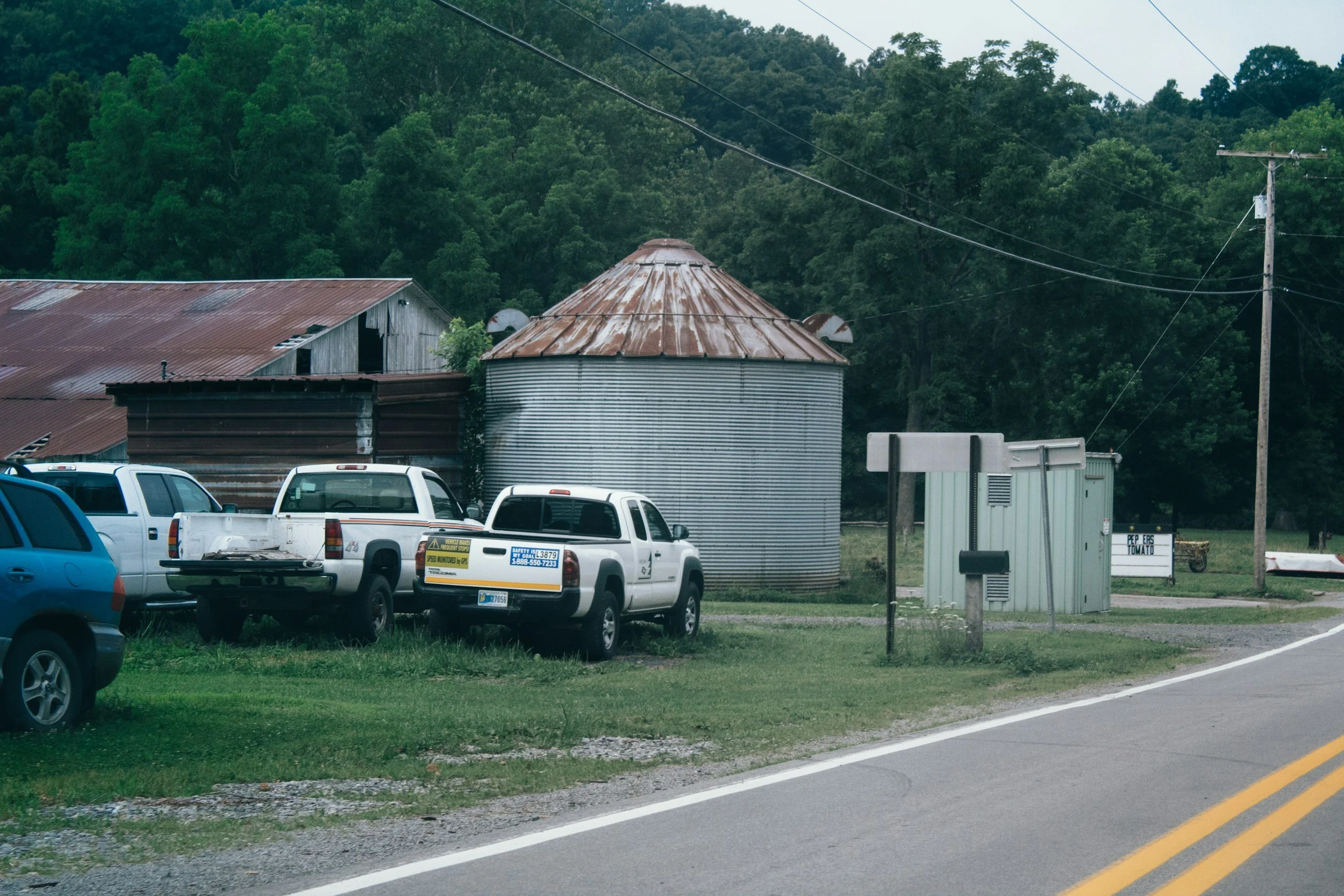
Imagine the rolling hills of Appalachia—places like Kentucky, Ohio, and West Virginia—where the mist clings to the trees and the history of coal and industry runs deep. I grew up in this corridor - the forested Appalachian mountains nearby, failing steel towns around the corner, and coal mines that were left to burn underground.
Now, imagine a massive, windowless concrete building the size of several football fields hums in the middle of that landscape. It’s not a factory making parts you can touch; it’s a data center, the "brain" behind your favorite AI tools and every "likes" notification on your phone.
Recently, a team of researchers from Shawnee State University took a hard look at this trend in their paper, The Modern Blight: Data Centers Spread Through Appalachia. They asked a tough question: Is it fair for Big Tech to move into these economically struggling areas when the environmental and financial costs are so high?.
Why Is Big Tech Moving to the Mountains?
You might wonder why companies like Google are suddenly interested in Franklin Furnace, Ohio, or Greenup County, Kentucky. It’s not just for the views. According to industry experts, Appalachia offers a "compelling value proposition" because it has:
Cheap Natural Gas: An abundant supply of fuel to power these energy-hungry giants.
Established Infrastructure: Roads and lines that are already there.
Low Disaster Risk: The region is relatively safe from things like hurricanes or earthquakes that could knock a server offline.
Ample Land: Plenty of space to build massive campuses.
While this brings a "sense of hope" for jobs and tax money, the researchers argue there is a darker side to this "modern blight".
Data centers don’t just sit there; they "drink" electricity and water at a rate that is honestly hard to wrap your head around.

In 2023, data centers across the U.S. used 176 terawatt-hours (TWh) of electricity. To put that in perspective:
That is roughly 4% of all electricity used in the entire United States that year.
That single amount of power is almost equal to all the electricity used by the entire State of Ohio in 2023.
Connecting these centers to the power grid isn’t free. It requires massive upgrades to wires and plants. Historically, these costs are shared by everyone who pays an electric bill. In 2024 alone, transmission upgrades cost U.S. consumers about $4 billion. In Ohio, some residents have already seen their electric bills spike by 10% to 35% because of these facilities.
Computers get hot. To keep them from melting, data centers use millions of gallons of water for cooling.
A medium-sized center can use 110 million gallons a year.
A large-scale center can "drink" up to 5 million gallons per day—that’s 1.8 billion gallons a year.
By 2040, it’s predicted that Central Ohio could face 56 different "resource gaps" where the demand for water is higher than the supply available. If that happens, people could literally be left without enough water just so a data center can stay cool.
Unexpected Environmental Justice Concerns
Appalachia has a long, painful history with industrial pollution. The researchers point out that adding data centers might just be adding another layer of "poison" to the region.
Carbon Emissions: Most of these centers are powered by natural gas. While gas is "cleaner" than coal, it still emits carbon. The rapid expansion of these centers could make it "functionally impossible" to meet goals for zero-carbon electricity.
Wastewater: The water used for cooling doesn’t always stay clean. It can be discharged with heavy metals and chemicals that degrade local rivers and pose health risks to people.
The Accountability Loophole: Companies often rely on something called "nonpoint source pollution". This means if the water gets dirty, it’s hard to "definitively" prove it came from one specific building, allowing big industries to avoid being taken to court
This hits home in the Ohio River Valley, which is still recovering from C8 chemical pollution (used for Teflon) that was linked to heart disease and cancer. The community is rightfully worried that data centers will become the next industry to leave behind a toxic legacy.

Utilitarianism vs. Ethical Egoism
The researchers use two "fancy" ethics terms to describe what’s happening.
Promoters say data centers create jobs (95,000+ in OH), boost the GDP ($11.8 billion), and advance AI for everyone.
Critics say tech giants only care about their own profits and AI rivalry, leaving local people to pay for the "blight".
The paper argues that while the benefits (like temporary construction jobs) are short-lived and spread thin, the costs (like pollution and high bills) are localized and permanent for the people living there.
This isn't just about numbers; it's about people who are already struggling.
Appalachia's Poverty Rate: 14.3%.
Scioto County, OH Poverty Rate: 19.1%.
National Average: 10.6%.
People living in poverty are the least able to "shoulder the cost" of electricity rates going up by 35%.
Is There a Middle Ground?
It’s not all doom and gloom. There are ways to make this work, but it requires being tough on Big Tech.
Tax Abatements & PILOTs: Scioto County approved a 75% tax break for Google for 15 years, but they paired it with a PILOT (Payment In Lieu Of Taxes) starting at $500,000 per year. This provides dependable funding for local schools and roads right now.
Stronger Safeguards: The study concludes that for this to be ethical, we need "equitable cost distribution" (meaning tech companies pay for their own grid upgrades) and "transparent accountability" for pollution.
The "data center boom" is the new gold rush, and Appalachia is the mine. Whether this leads to prosperity or just another "blight" depends on how much the community demands from these tech giants.