What Do Booking.com’s Sustainability Ratings Mean?
We all love to travel. I have a thing for hot springs, oceans, and rainforests. To get to these beautiful locations I have commonly used Booking.com. I noticed they include a little icon for sustainable hotels, though I often find it hidden and don’t really understand what it means. So, I decided to dive into their sustainability.
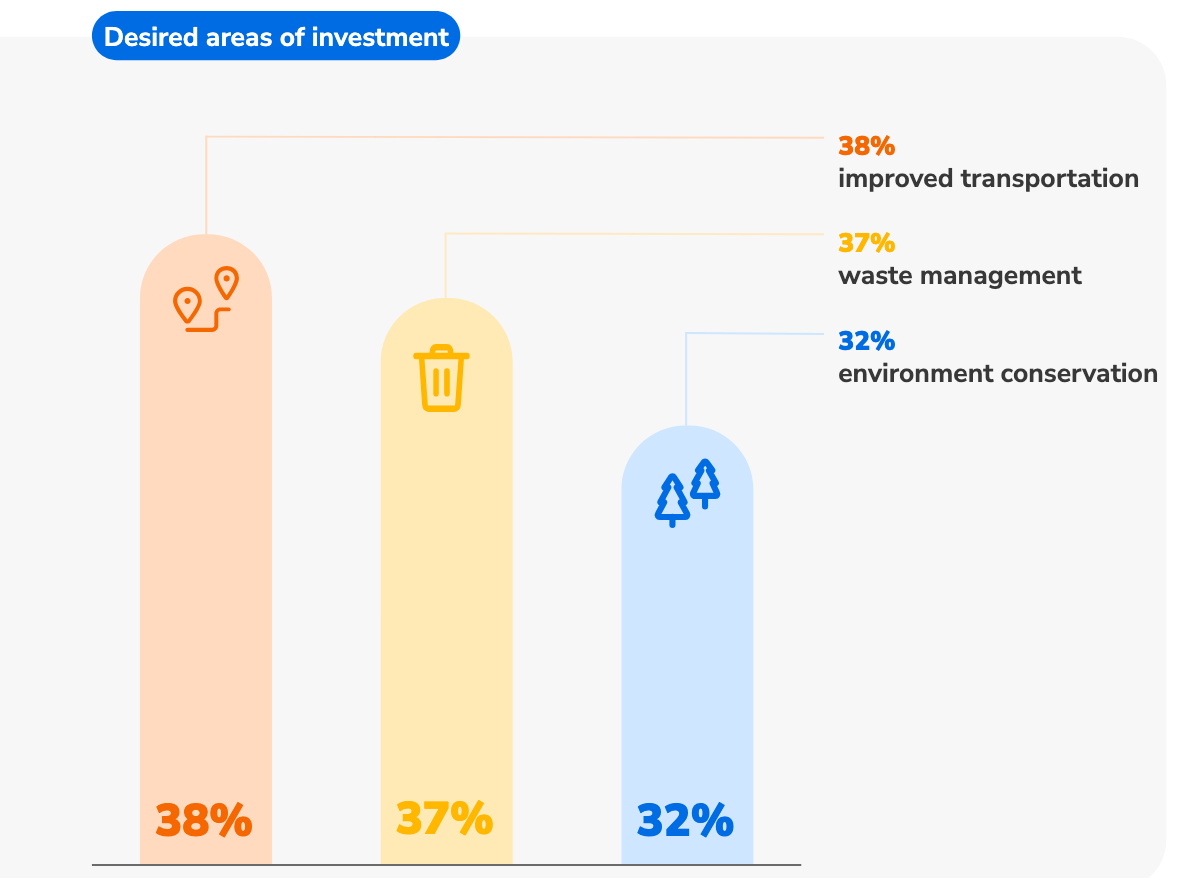
Over two-thirds of travelers feel that witnessing sustainability practices while traveling inspires them to be more sustainable in their everyday lives, and 71% want to leave the places they visit better than when they arrived.
In 2025, for the first time, more than half of travelers (53%) are now conscious of tourism's impact on local communities as well as the environment.
But when it comes to your hotel on Booking.com, trying to figure out what the sustainability rating means is a bit of a puzzle.
Booking Holdings—the massive company behind major travel brands like Booking.com, Priceline, Agoda, KAYAK, and OpenTable —released its latest Sustainability Report.
Their mission is to "make it easier for everyone to experience the world". But experiencing the world also means protecting it.
If you are a student, a frequent flier, or just someone who cares about the Earth, you might be wondering what massive corporations are actually doing to fight climate change and support local communities.
To tackle the massive challenge of sustainability, Booking Holdings breaks its efforts down into three main pillars:
Operations: Running their own business more sustainably and building a green culture.
Travel: Making it easier for everyday travelers to find and book eco-friendly options.
Industry: Working with other companies to drive sustainable growth across the entire travel world.
Tackling the Carbon Footprint
When companies talk about their carbon footprint, they usually divide it into three categories, or "Scopes." Booking Holdings has made some impressive strides here, but they also have a steep mountain left to climb.
Scope 1 and 2 Emissions (The Stuff They Control)
These are the direct emissions from a company's owned sources (like fuel for company cars) and indirect emissions from the electricity they buy to power their offices.
Booking Holdings has reduced its absolute Scope 1 and Scope 2 emissions by over 85% compared to their 2019 baseline.
They transitioned their offices to 100% renewable electricity, including installing direct solar panels at their office in Bengaluru, India.
This is where things get complicated. Scope 3 covers all the indirect emissions in a company's value chain.
For Booking, this means the emissions generated by the goods and services they purchase to run their business. It does not include the emissions of the hotels or airlines on their platform, because Booking doesn't directly control them. More below on how they tell us about the sustainability of the hotels they work with.
Scope 3 emissions account for a massive 99.5% of the company's total greenhouse gas emissions. They managed to reduce Scope 3 emissions by 17% compared to 2019.

How Booking.com Rates Hotel Sustainability
If you've booked a hotel recently, you might have looked for a little green leaf or an "eco-friendly" badge. Originally, Booking Holdings set a target in 2022 aiming for over 50% of their 2027 bookings to be made on "more sustainable offerings".
However, the travel industry and government regulations are constantly changing. Because of these new rules, Booking.com had to completely shift how it rates and displays hotel sustainability.
Booking.com created a handbook for hotels interested in becoming more sustainable.
The Shift to Third-Party Certifications
Instead of using their own internal rating system, Booking.com is now relying entirely on official, independent third-party certifications to tell travelers if a hotel is truly sustainable.
They look for rigorous external credentials like the EU Eco Label, Green Key Global, and Sustonica.
By focusing on these official labels, Booking.com increased the number of certified accommodation partners displayed on their platform by 43% in 2024 (jumping from 16,000 to 23,000 properties).
Because 67% of travelers want all booking sites to use the same labels, Booking.com updated its program to help hotels figure out which certifications fit them best. They are testing a survey tool that gives hotels targeted tips on saving water, reducing food waste, and using less plastic, ultimately guiding them toward getting officially certified.
Travelers can now find and book electric or hybrid taxis in 1,328 cities with Booking.com and use search filters to locate electric and hybrid rental cars in 75 countries.
Using The Sustainability Filter
When going to the main Booking.com website it;s a bit challenging to see where I might find the sustainable hotels.

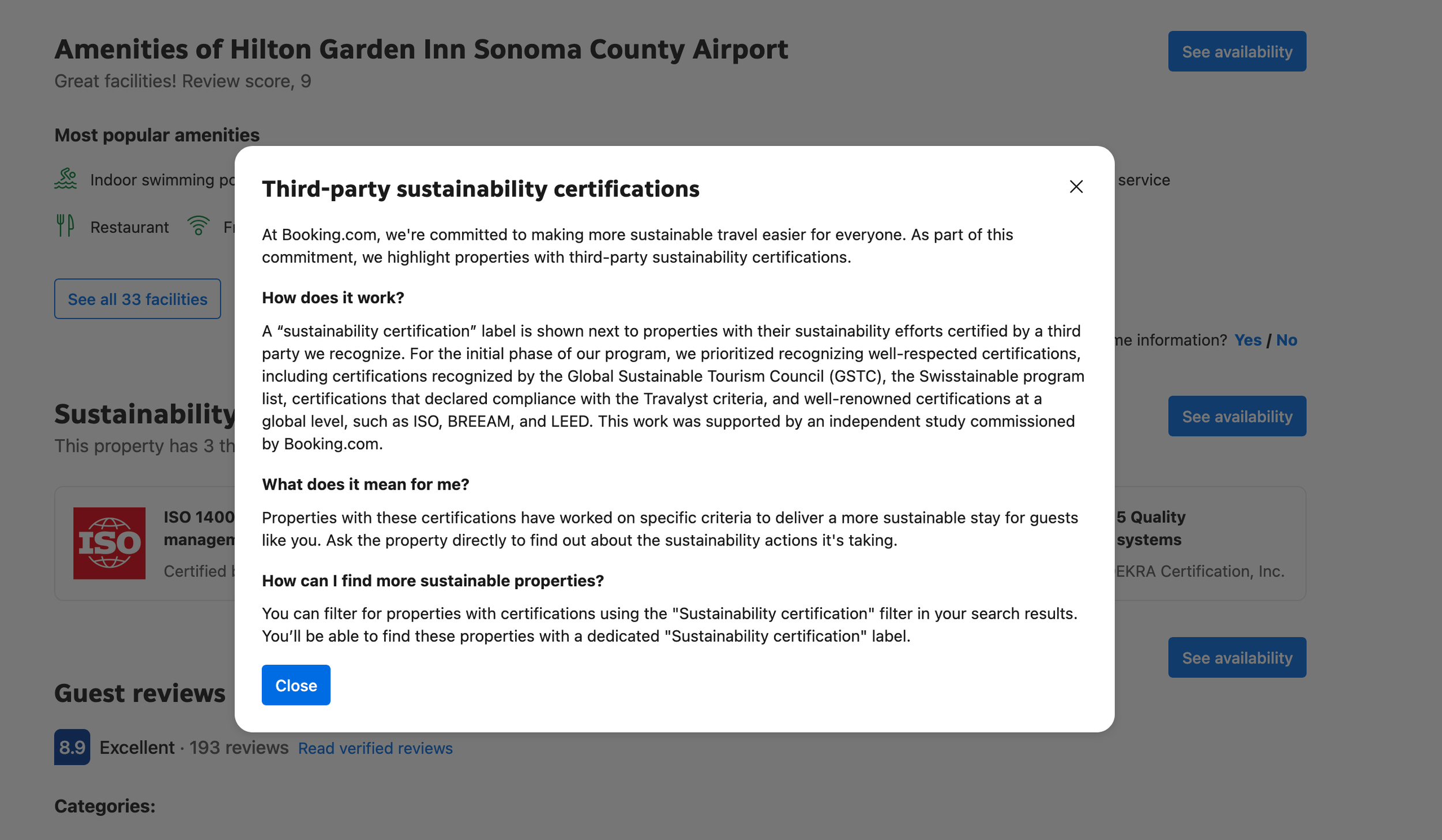
I was about to take a staycation to Napa Valley in California to relax in the hot springs at Dr. Wilkerson’s Resort, so I started here. As you can see, finding the filter for sustainability is like a needle in a haystack. And ven when I did find it, all I got was a list of “ISO” certifications. Not enough to make a decision on my part. For me I would rather have a qualitative assessment - like say a rating of 1 to 5 using leaves or something similar.
When I click to learn more all I get is a generic description of what types of sustainability certifications were looked. at.
What Can Be Improved?
While Booking Holdings has made great progress, transparency is key to sustainability. The 2024 report highlights several hurdles the company still needs to overcome:
The Target Tracking Problem
Because government regulations forced Booking.com to change how they label sustainable hotels, they had to completely scrap their previous goal of having 50% of bookings be "sustainable" by 2027. They admitted this target is "no longer applicable" and won't be used to measure progress moving forward.
The Certification Gap
While Booking is pushing for third-party certifications, the report honestly notes that these certifications are "not yet widespread across global accommodation supply". Until more hotels go through the time and expense of getting officially certified, travelers will still have a limited pool of verified eco-friendly options.
Supply Chain Data
Tracking the emissions of every single company you buy things from is incredibly hard. Booking notes that supply chain emissions are "difficult to measure and mitigate". Right now, they rely heavily on industry averages to guess their carbon footprint, though they are trying to shift to supplier-specific data to get a more accurate picture.