Can Maersk Navigate Through Its Rough Seas on Sustainability? (2025 Report)

Have you ever wondered how the sneakers you are wearing, the phone in your hand, or the out-of-season fruit in your fridge got to you? The answer is almost always the same: ocean shipping.
Global trade is the invisible engine of the modern world, and A.P. Moller - Maersk (Maersk) is one of the biggest drivers of that engine. Operating in almost 130 countries with a fleet of over 700 container vessels and more than 100,000 employees, Maersk connects supply chains across the globe. But moving millions of containers across oceans, rails, and roads comes with a massive environmental footprint.
Today, the logistics industry is facing a massive challenge: how do we keep the world connected and supplied without destroying the planet?
Maersk’s recently released 2025 Annual Report gives us a transparent, fascinating look into how one of the world's largest logistics companies is tackling Environmental, Social, and Governance (ESG) issues. 2025 was a year marked by extreme weather, geopolitical conflicts, and economic uncertainty. Despite these rough seas, Maersk pushed forward with its ambitious climate transition plan.
Climate Progress Amidst Disruption
When a company operates over 700 massive ships, its environmental impact is significant. Maersk has set a bold, science-based target: to reach net-zero greenhouse gas (GHG) emissions across its entire business by 2040.
However, progress is rarely a straight line.
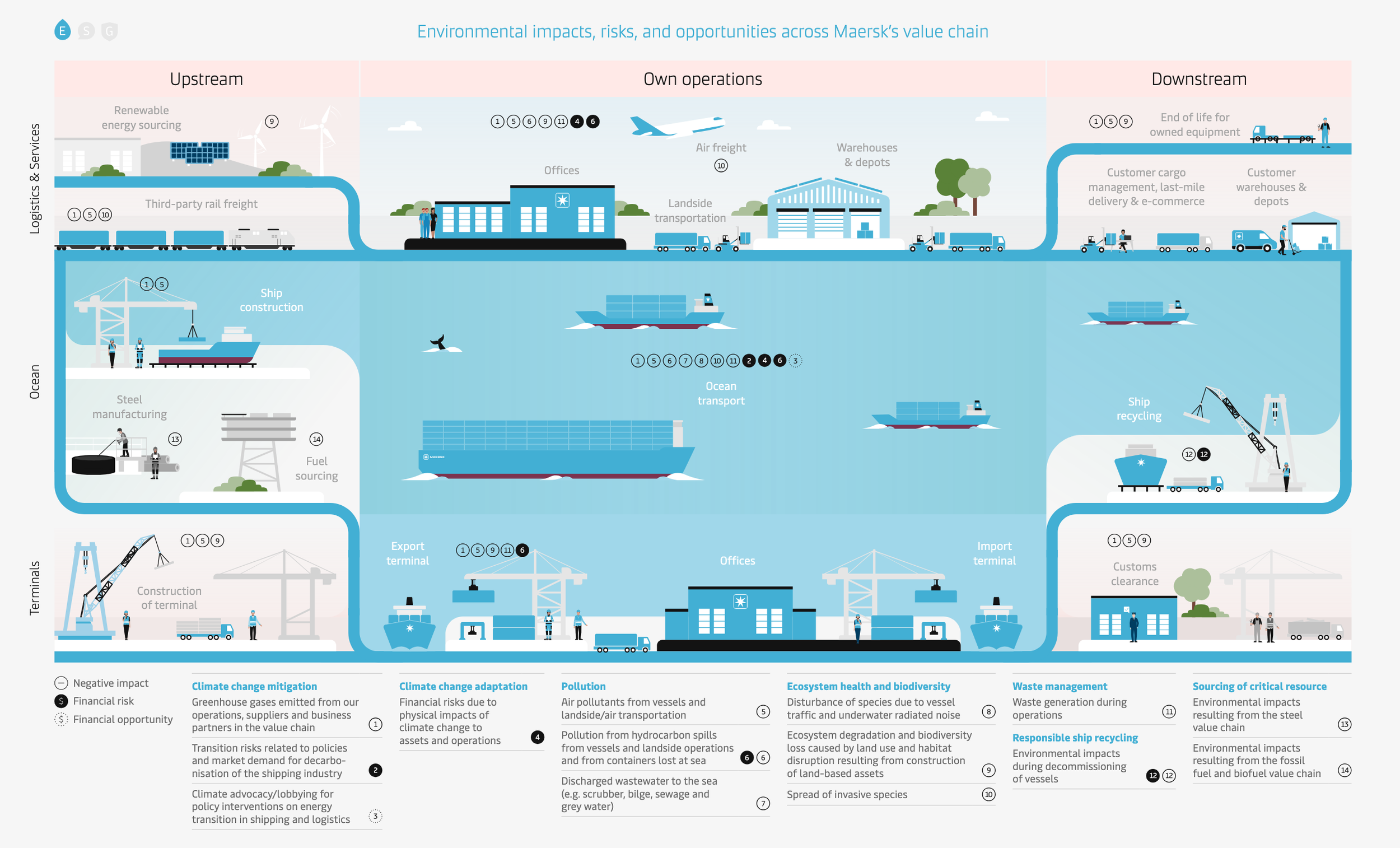
In 2025, they recorded an increase in total greenhouse gas emissions, landing at 85.4m tonnes, and above our 2022 baseline of 82.8m tonnes. The increase is attributed to Scope 3 value chain emissions and mainly driven by an increased sale of marine fuels and containers to third parties and from taking delivery of 10 new dual-fuel methanol vessels.

Why did emissions go up if the company is trying to go green?
The answer lies in geopolitics and global supply chains. Throughout 2024 and 2025, security disruptions in the Red Sea forced commercial ships to avoid the Suez Canal and instead take a massive detour around the Cape of Good Hope in Africa. Longer voyages mean more days at sea, which requires burning more fuel. Furthermore, Maersk's "Scope 3" emissions (the indirect emissions from their value chain, like selling marine fuels and containers to third parties) also increased.
Despite this absolute increase in emissions, Maersk actually became much more efficient at what it does. Think of it like a car's gas mileage: you might drive more total miles and use more gas overall, but your miles-per-gallon improved. Maersk’s Ocean energy efficiency (measured by a metric called EEOI, which tracks CO2 emitted per tonne of cargo moved over a nautical mile) dropped to a record low of 10.8 from 13. This means that for every pair of shoes or smartphone they transported, they did it with unprecedented energy efficiency.
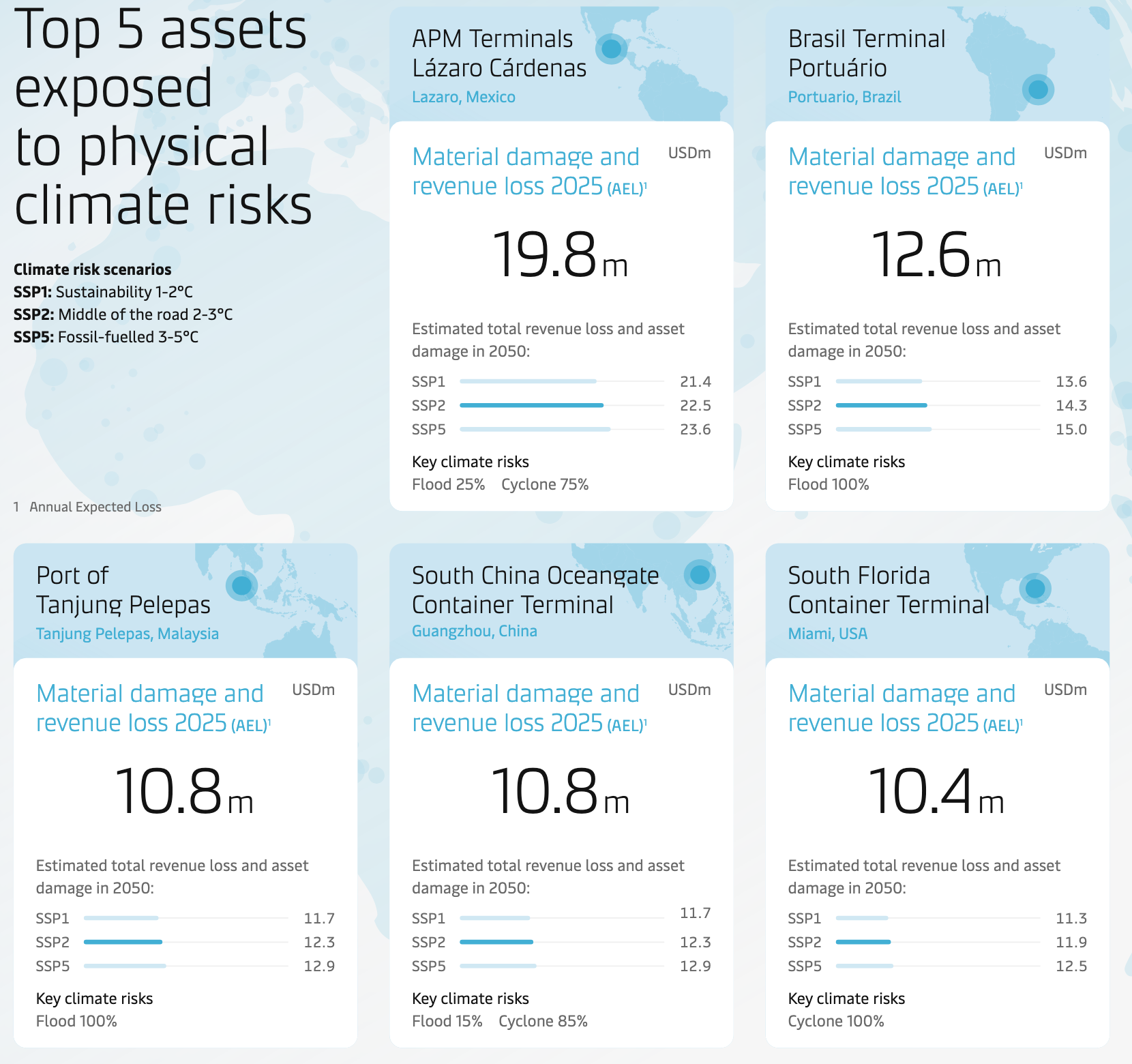
The delay of the International Maritime Organisation’s Net-Zero Framework may slow the momentum of the energy transition of the shipping industry. However, while stories of ESG backlash make headlines, the continuing increase in the number of companies committing to the Science Based Targets initiative is one indicator that climate change mitigation remains a priority for business globally. Extreme weather, earth system change, biodiversity loss and natural resource shortages are already disrupting global supply chains and impacting infrastructure and asset values. As a result, companies are increasingly investing in climate change mitigation measures including embedding climate and nature risks into enterprise risk management, capital planning and resilience strategies.
“The most significant dependency for decarbonisation at an industry level, however, remains the need for
effective global climate regulation to close the price gap between traditional fossil fuels and low emission
alternatives.”
Shifting the Fuel Mix
You can't reach net-zero by just driving ships more efficiently; you have to change what powers them. In 2025, Maersk took massive steps in its "multi-fuel" transition strategy.
“One significant milestone in 2025 was the first e-methanol bunkering of Laura Mærsk – the world’s first methanol-capable container vessel – at the opening of the world’s largest commercial e-methanol plant in Kassø, Denmark.”
Dual-Fuel Fleet: The company took delivery of 10 new dual-fuel vessels, bringing their total to 19. These ships can run on traditional fossil fuels, but they are also capable of running on green methanol, a lower-emission alternative.
Historic Milestones: In May 2025, Maersk’s first dual-fuel vessel, the Laura Mærsk, was bunkered with e-methanol produced from a brand-new, world-first commercial facility in Kassø, Denmark. This facility uses renewable energy and biogenic CO2 (from waste) to create fuel, proving that alternative green shipping fuels are becoming a reality.
Looking Ahead: Maersk didn't stop at methanol. They also signed supply agreements for liquefied biomethane (another lower-emission fuel) and piloted new ethanol fuel blends to give customers more flexible, sustainable options.
Smarter Networks and Electric Terminals
Sustainability isn't just about the ships; it is about the entire network. In 2025, Maersk fully phased in the "Gemini Cooperation," a new East-West shipping network built in partnership with Hapag-Lloyd.
By reducing the number of stops a ship makes and utilizing high-performing transit hubs, the network achieved an industry-leading schedule reliability of over 90%. Fewer delays mean less time ships spend idling or speeding up to catch up on schedules, which saves massive amounts of fuel.
On land, the company accelerated its push toward electricity. At APM Terminals, 62% of the electricity used was powered by renewable sources (up from 46% in 2024). A shining example of this is the new Rijeka Gateway terminal in Croatia, which is fully powered by renewable electricity and operates almost entirely with electric equipment.
In Latin America, Maersk even launched a fleet of third-party electric trucks supported by high-capacity charging stations powered 100% by renewable energy. In Lazaro Cardenas, Mexico, APM Terminals acquired six state-of-the-art electric ARMG cranes as part of the terminal’s Phase II expansion, investing USD 165m to date. The project adds 65 hectares area and doubles annual capacity to 2.2m TEU, and highlights APM Terminals’ commitment to Mexico’s economic growth and sustainable port operations.
People, Safety, and Culture
A company is only as strong as its people. The "S" in ESG focuses on how a company treats its employees, the workers in its supply chain, and the communities it operates in. For a logistics company handling heavy machinery, hazardous cargo, and massive vessels, safety is the ultimate priority.
Safety and Security
Maersk operates in environments where the physical risks are very real. In 2025, the company achieved a critical milestone: zero fatalities among its own employees and the contracted workers operating directly under its supervision.
However, the company was transparent about the tragic reality of the broader industry. There were four fatal incidents involving "value chain workers"—individuals working for external suppliers or partners not under Maersk's direct control. Maersk explicitly stated that while these incidents were outside their direct management, the loss of life reinforces their commitment to pushing for better safety standards across the entire global supply chain.
To improve everyday safety, Maersk leaders conducted over 15,000 "Gemba walks" (safety and security observations on the front lines). They also ensured that 100% of "high potential incidents" (close calls that could have resulted in severe injury) were followed up with dedicated learning teams to prevent them from happening again.
Diversity, Equity, and Inclusion
Creating a fair and inclusive workplace is a core part of Maersk's social strategy. The company made notable strides in gender diversity in 2025, with women now holding 36% of top management positions (up from 31% in 2024).
Furthermore, to better understand the lived experiences of its diverse workforce of over 100,000 people, Maersk rolled out a new engagement survey called "PeoplePulse". The survey saw a massive 89% participation rate, resulting in an engagement score of 83—placing Maersk in the top 10% of global norms for employee engagement.
Human Rights and Fair Labor
Operating in 130 countries means navigating diverse, and sometimes challenging, labor markets. Maersk maintains a strict commitment to human rights, particularly focusing on vulnerable groups like migrant workers and seafarers. Their assessments in 2025 confirmed that no Maersk employees in any country are paid below the applicable "adequate wage" benchmark, ensuring that workers earn enough to meet basic needs for themselves and their families.
Governance
Governance is the glue that holds environmental and social promises together. It is about ethics, transparency, and the rules a company sets for itself and its partners.
Holding Suppliers Accountable
Maersk relies on a sprawling network of approximately 40,000 suppliers globally. In 2025, Maersk achieved an incredible milestone: 100% of their in-scope suppliers formally committed to the Maersk Supplier Code of Conduct. This means that the companies providing Maersk with everything from warehouse equipment to IT services have legally agreed to uphold strict standards regarding environmental responsibility, labor rights, and anti-corruption.
To enforce this, Maersk didn't just ask for signatures; they deployed a new ESG digital platform to assess supplier risk based on industry and country data. For suppliers flagged as high-risk, Maersk conducted audits and site visits, successfully closing 83% of the identified gaps through targeted improvement plans.
A Speak-Up Culture
A healthy corporate culture requires a safe way for people to report bad behavior. In 2025, Maersk launched a highly upgraded, AI-assisted Whistleblower system, available in 73 languages via phone and 20 languages online. The system allows anyone—employees or external partners—to confidentially report misconduct.
The system received 1,174 valid reports in 2025 (a 24% increase from 2024), which the company views as a positive sign that employees trust the system and are aware of how to use it. Every substantiated case—whether related to conflicts of interest, workplace behavior, or discrimination—resulted in disciplinary actions, including dismissals where necessary.
Navigating the AI Frontier
As Artificial Intelligence reshapes global business, Maersk took steps to ensure it is used ethically. In 2025, they integrated a unified framework for data and AI risks to align with global regulations, including the EU AI Act. Their Data Ethics Policy—built on Transparency, Respect, Security, and Innovation—ensures that as their logistics network becomes more automated and intelligent, the privacy and rights of customers and employees remain fiercely protected.